

What this covers
|
A dehumidifier that was filling a tank on day one and barely producing on day three looks like a machine that is failing. Usually it is not. It is a machine telling you something about the job, and reading that signal correctly is the difference between finishing on schedule and renting equipment you do not need.
The number that carries the signal is not on the box. It is grain depression, and it is the single most useful reading on a drying job.
What Grain Depression Actually Measures
Grain depression measures the moisture difference between intake and exhaust air. You take a reading of the air going into the machine and the air coming out, and the gap between them, measured in grains of moisture per pound of air, tells you how hard the machine is working right now.
A wide grain depression means the machine is working hard, pulling real water out of the air passing through it. A narrow grain depression means little accessible moisture remains in that air. The machine has not weakened. The air it is being fed has already given up most of what it had.
This is why the tank is a poor guide. A slowing tank looks like a slowing machine. The grain depression tells you whether the machine is slowing or the job is changing underneath it.
Water in the Air Versus Water in the Material
To read the signal you have to separate two kinds of water. A dehumidifier removes moisture from the air, not directly from material. It can only pull what the air hands it.
Early in a job the air is loaded, because evaporation from soaked surfaces is fast and easy. The machine has plenty to pull and the grain depression is wide. Then the surfaces dry and the remaining water is bound water, held inside plaster, subfloor and framing, which leaves material slowly through evaporation. The air is now relatively dry even though the structure is still wet, so the machine sees little to pull and the grain depression narrows.
The machine looks stalled. The job is not. The water simply moved from a place the dehumidifier can reach, the air, to a place it cannot, the material, and it is coming out at the pace the material allows.
Why a Second Machine Changes Nothing
This is the practical payoff, because the instinct at a narrow grain depression is to add another dehumidifier.
If the air is already dry, a second identical machine beside the first has the same empty air to work with. Two machines pulling at a narrow grain depression produce roughly what one did, which is very little, because the limit is not machine capacity. The limit is how fast the material is releasing water into the air.
Adding capacity against a material-limited job buys noise and a power draw, not drying. The job has stopped being a machine problem.
What It Has Become Instead
A narrow grain depression late in a job points at one of two things, and neither is more dehumidification.
The water is bound in material and simply needs time, or more airflow at the surface to speed evaporation. Air movers move bound moisture from material into the air, so better surface airflow hands the dehumidifier more to work with.
The space is exchanging air with outside, so the machine is conditioning fresh humid air as fast as it dries the room. The fix is sealing the space, not adding a machine.
Reading | What it means | Move |
Wide grain depression | Machine pulling real water | Leave it, it is working |
Narrow, material still wet | Water bound, air already dry | Airflow and time, not more machines |
Narrow, readings not falling | Air exchange with outside | Close the space |
The Los Angeles Material Factor
Local building stock makes the narrow-but-not-finished state last longer here. Plaster over lath, common in the older parts of the city, holds water and releases it more slowly than modern drywall, so the bound-water phase drags on and the grain depression sits narrow for days while the structure is genuinely still drying.
Read that as a dead machine and you pull the equipment early and trap moisture. Read it as a material releasing slowly and you leave a right-sized machine in place and let it finish. The grain depression is what tells the two apart, and in older Los Angeles housing the difference is a week of drying.
Renting to Read, Not Just to Run
The reason this matters for equipment is that a job read through grain depression needs fewer machines, not more, and needs them for the right length of time. Matching the set to the job, from the LA Restoration Rentals fleet, beats renting a stack of units to brute-force a job that was never machine-limited. A supplier who talks about grain depression rather than tank size is sizing to the work. The Los Angeles coverage sits on the Google Business Profile.
How to Take the Reading
Grain depression sounds technical, and the measurement is simpler than the name. You need a thermo-hygrometer, which reads temperature and humidity, and you take two readings: the air going into the dehumidifier and the air coming out of it.
The machine’s intake air is the room air it is pulling in. The exhaust is the drier, warmer air it is putting back out. The difference in the moisture content between those two, converted from the humidity and temperature readings, is the grain depression. Many commercial dehumidifiers make this easy by giving you the numbers you need at the inlet and outlet, and the conversion is a standard chart or a calculation the trade uses daily.
What matters is not precision to the last grain. It is the trend and the size of the gap. A wide gap today and a narrow gap tomorrow tells the story on its own: the machine went from pulling real water to running out of accessible moisture, and that transition is the signal to change what you do, not to add a machine.
What a Healthy Job Looks Like in the Numbers
On a job that is going well, the numbers tell a clean story. Early on, the room humidity is high and the grain depression is wide, because evaporation from the wet surfaces is loading the air and the machine has plenty to pull. Over the following days the room humidity falls, the material readings fall with it, and the grain depression gradually narrows as the easy moisture is removed.
A narrowing grain depression alongside falling material readings is not a stall. It is a job finishing. The machine is pulling less because there is less to pull, and the structure is drying as it should. That is the normal and correct shape of a drying curve.
Pattern | Grain depression | Material readings | What it is |
Healthy finish | Narrowing | Falling | A job finishing |
Stall | Narrow | Flat | Water stuck where the air is not reaching |
The stall is the different pattern: a narrow grain depression with material readings that are not falling. That combination says the air is dry, the machine has nothing to pull, and the water is stuck somewhere the air is not reaching. Same narrow reading, completely different meaning, and only the material readings alongside it tell the two apart.
Why This Saves Money, Not Just Time
Reading grain depression changes the economics of a job. The instinct to add machines at a slowdown is expensive twice: the extra rental and power, and the fact that the added capacity does nothing against a material-limited job, so the money buys no drying.
A job read through grain depression uses the right number of machines for the right length of time. It does not over-rent at the start, and it does not panic-rent in the middle. It also finishes on a reading rather than on a cautious extra few days, which means the equipment goes back when the job is done rather than when someone finally trusts it is done. On a weekly rate, the saved days are real money, and the meter that reveals them costs almost nothing next to the machines.
What This Means for Choosing a Machine
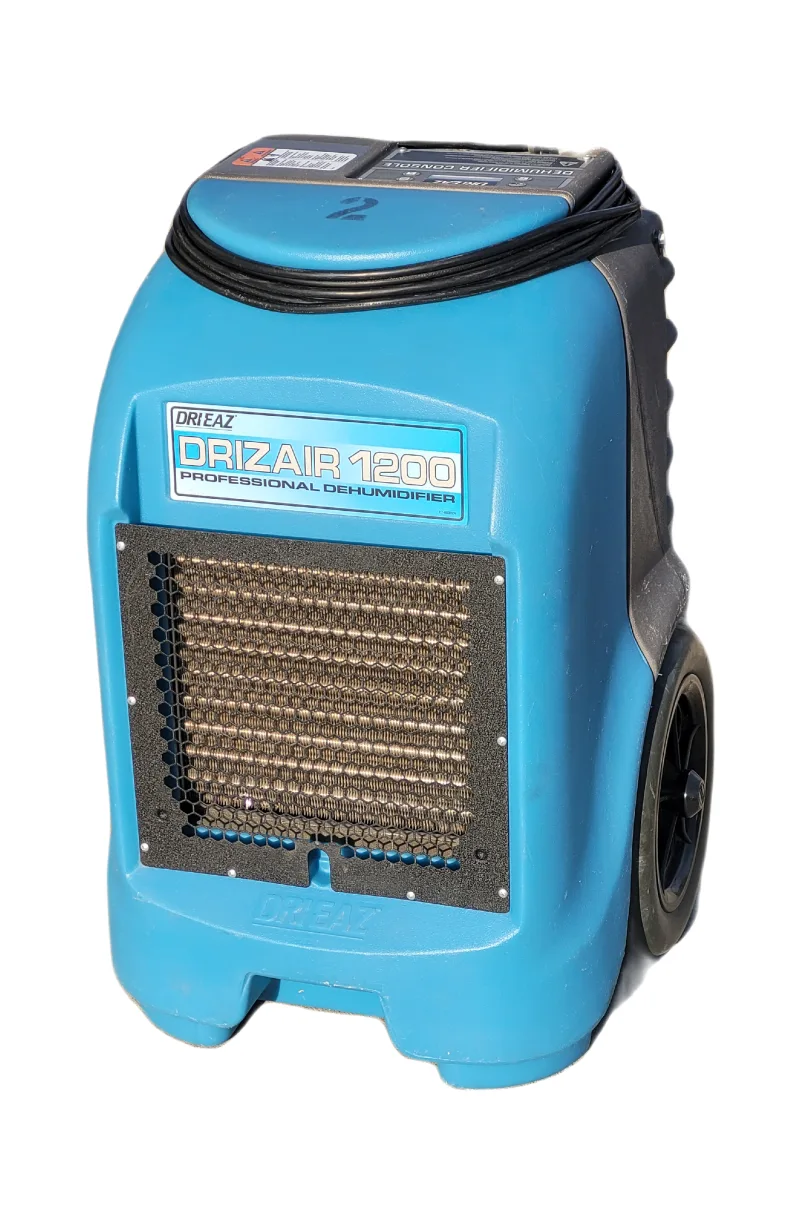
Reading a job through grain depression also changes how you choose the machine in the first place. The unit that matters is the one that keeps a usable grain depression deep into the job, when the air has dried and the remaining water is bound in material. That is where a low grain refrigerant unit earns its place, because it keeps pulling moisture at low humidity where a standard refrigerant unit has effectively stopped.
A standard unit shows a wide grain depression early and a collapsed one by the second half of a long job, not because it failed but because it was never built to work at low humidity. An LGR unit holds a usable grain depression further into the dry-down, which is exactly the phase where a long job still has water to remove from the structure. So on anything expected to run past the easy first couple of days, the machine that reads well late is the one that finishes.
The practical version is to describe the job honestly when renting: what is wet, how dense and slow-release it is, and how long the job is likely to run. A short, fast, hard-surface loss can use a standard unit. A long job into plaster, subfloor and framing wants a machine that keeps a grain depression open at low humidity, because that is the condition it will spend most of its time in. Matching the machine to where the job will actually live, not to the easy opening day, is what the reading teaches.
The Short Version
A dehumidifier slowing down is usually the job talking, not the machine failing. Read the grain depression, not the tank. Wide means working. Narrow means the water has moved somewhere the machine cannot reach, and the answer is airflow, time or a sealed room, never a second machine against empty air.


















Be First to Comment