
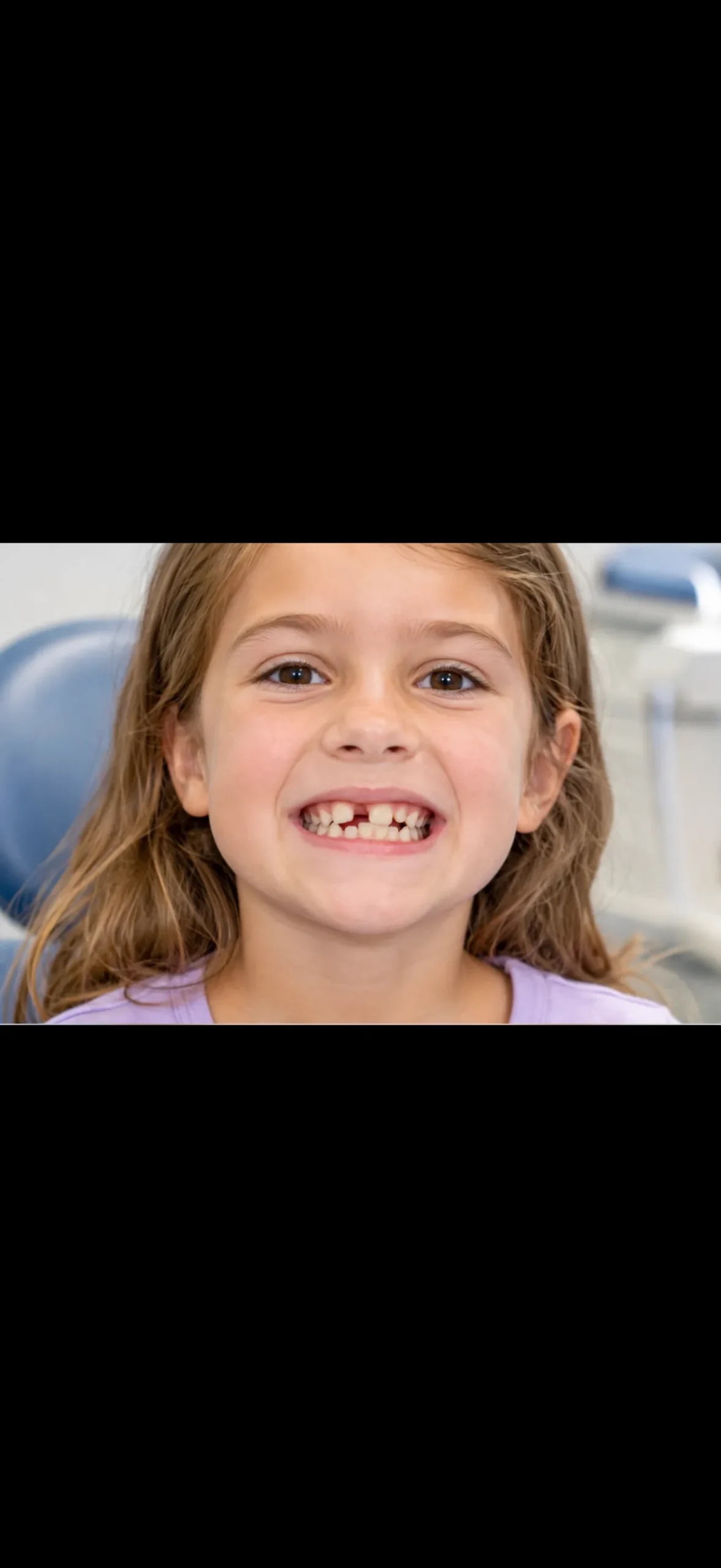

What Are the Signs of a Bad Bite in Children? What Parents Should Look For | Vista Orthodontics | Dr. Brad Santelli
As parents, we naturally pay attention to our children’s smiles. We notice crooked teeth, gaps, and changes as their permanent teeth begin to come in.
However, one important aspect of dental development that parents may overlook is the way the upper and lower teeth fit together.
This relationship is known as the bite, or dental occlusion.
A child can have relatively straight-looking teeth and still have an underlying bite problem. In some cases, the upper and lower jaws may not be developing in the proper relationship, or certain teeth may be positioned in a way that affects how the child bites and chews.
Recognizing the signs of a bad bite early can help parents determine when an orthodontic evaluation may be beneficial.
What Is Considered a Normal Bite?
A healthy bite occurs when the upper and lower teeth fit together in a balanced and functional relationship.
In a typical bite:
- The upper front teeth slightly overlap the lower front teeth.
- The upper back teeth generally sit slightly outside the lower back teeth.
- The teeth come together comfortably when biting.
- The jaws function without noticeable shifting or discomfort.
Not every child’s bite will look exactly the same, particularly while baby teeth are being replaced by permanent teeth.
However, significant discrepancies between the upper and lower teeth may indicate an orthodontic problem.
8 Common Signs of a Bad Bite in Children
1. Overbite: Upper Front Teeth Cover Too Much of the Lower Teeth
An overbite occurs when the upper front teeth vertically overlap the lower front teeth.
A small amount of overlap is normal. However, an excessive overbite can cause the lower front teeth to contact the roof of the mouth or surrounding gum tissue.
Some children with deep overbites may experience excessive tooth wear or irritation of the soft tissues.
An orthodontist can determine whether the overlap is within a normal range or requires correction.
2. Underbite: Lower Teeth Extend in Front of Upper Teeth
An underbite occurs when the lower front teeth extend in front of the upper front teeth.
This may be caused by differences in the development or positioning of the upper and lower jaws.
Underbites are particularly important to evaluate during childhood because some treatment approaches may be more effective while a child is still growing.
Depending on the severity and underlying cause, early orthodontic intervention may be recommended.
3. Crossbite: Upper Teeth Bite Inside the Lower Teeth
A crossbite occurs when one or more upper teeth sit inside the lower teeth when the child bites down.
Crossbites can occur in the front or back of the mouth.
Some children with a crossbite shift their lower jaw to one side to bring their teeth together.
If a crossbite is causing a functional jaw shift, early correction may help improve the bite relationship and reduce the risk of uneven dental wear.
A palatal expander is one treatment option for certain children with a narrow upper jaw and posterior crossbite.
4. Open Bite: Front Teeth Do Not Touch
An open bite occurs when the upper and lower front teeth do not meet when the back teeth are closed together.
This can create a visible opening between the upper and lower front teeth.
An open bite may be associated with habits such as prolonged thumb-sucking or certain tongue-thrusting patterns.
Depending on the cause, an open bite can make it difficult for a child to bite into foods such as sandwiches or apples.
Early evaluation can help identify contributing habits and determine the most appropriate treatment.
5. Excessively Protruding Front Teeth
Some children have upper front teeth that extend significantly forward.
These teeth may appear to stick out or angle outward.
Protruding teeth can be more vulnerable to accidental injury, especially during sports and physical activities.
Depending on the severity, orthodontic treatment may be recommended to improve their position and reduce the risk of trauma.
6. Crowded or Overlapping Teeth
Crowding occurs when there is insufficient space for teeth to align properly.
Parents may notice that permanent teeth are coming in behind baby teeth, overlapping neighboring teeth, or appearing twisted.
Although some crowding is normal during dental development, significant crowding may indicate a lack of available space.
An orthodontist can evaluate whether the crowding is likely to improve naturally or whether early intervention may be beneficial.
7. Difficulty Biting or Chewing
Children with certain bite problems may have difficulty biting into foods or chewing comfortably.
Parents might notice that their child consistently chews on one side of the mouth or struggles to bring the front teeth together when biting.
Although there can be several explanations for these behaviors, an orthodontic evaluation can help determine whether an improper bite is contributing to the problem.
8. Jaw Shifting, Clicking, or Discomfort
Some children may shift their lower jaw to one side when closing their mouth.
This can sometimes occur when the teeth do not fit together properly, particularly with certain crossbites.
Jaw clicking or discomfort can have multiple causes and does not automatically indicate an orthodontic problem.
However, persistent symptoms should be evaluated by an appropriate dental or medical professional.
Can a Bad Bite Affect My Child’s Long-Term Dental Health?
Depending on the type and severity of the bite problem, an untreated orthodontic discrepancy may contribute to several concerns.
These can include:
- Increased or uneven tooth wear.
- Difficulty biting and chewing.
- Increased vulnerability of protruding front teeth to injury.
- Gum irritation from improperly positioned teeth.
- Functional jaw shifts.
- Difficulty maintaining oral hygiene in severely crowded areas.
Not every bite problem will cause these complications, and not every orthodontic discrepancy requires immediate treatment.
The important thing is to identify the problem and understand whether it needs to be addressed.
At What Age Should a Child Be Evaluated for Bite Problems?
The American Association of Orthodontists recommends that children receive their first orthodontic evaluation by age 7.
This is an important milestone because the first permanent molars and permanent front teeth are generally beginning to erupt.
At this stage, an orthodontist can evaluate the developing bite and identify potential concerns involving the upper and lower jaws.
Some conditions benefit from early intervention, while others are best treated once additional permanent teeth have erupted.
An early evaluation does not mean your child will automatically need braces.
Can a Bad Bite Correct Itself as My Child Grows?
Some dental alignment changes occur naturally as children lose baby teeth and permanent teeth erupt.
For example, temporary spacing and certain minor irregularities may improve with normal dental development.
However, significant skeletal discrepancies, crossbites, and certain other bite problems are less likely to resolve without appropriate intervention.
Parents should not assume that every bite problem will correct itself with age.
An orthodontist can distinguish between normal developmental changes and conditions that may require treatment.
How Are Bite Problems Corrected in Children?
Treatment depends on the type of bite problem, the child’s age, and their stage of development.
Common orthodontic treatment options include:
- Palatal expanders: Used to widen the upper jaw in appropriate growing patients.
- Traditional braces: Used to reposition teeth and correct various bite discrepancies.
- Functional appliances: Used in selected patients to address certain jaw relationships during growth.
- Clear aligners: Appropriate for certain orthodontic conditions, depending on the child’s age and treatment needs.
- Habit correction: Helping address behaviors that may contribute to an open bite or other dental concerns.
The orthodontist will determine which approach is most appropriate after evaluating the child’s teeth, jaws, and overall dental development.
Why Early Orthodontic Evaluations Matter
One of the biggest misconceptions among parents is that orthodontic treatment should not be considered until all permanent teeth have erupted.
Although many children do wait until their teenage years for braces, certain bite problems are better evaluated and sometimes treated earlier.
The opportunity to address developing problems while a child is still growing can be valuable.
The goal is not to treat every child early. It is to recognize which children may benefit from intervention and which children can safely wait.
Give Your Child the Foundation for a Healthy Smile
A beautiful smile is about more than straight teeth. It is also about a healthy bite, proper tooth positioning, and balanced dental development.
At Vista Orthodontics, we believe parents should have the information they need to make confident decisions about their children’s orthodontic health.
Whether your child has an underbite, crossbite, excessive overbite, crowding, or another developing concern, an orthodontic evaluation can help identify the issue and determine the appropriate next steps.
If your child is around age 7 or you have noticed any of the warning signs discussed in this article, consider scheduling an orthodontic consultation.
Vista Orthodontics — Helping children and families achieve healthy, confident smiles through personalized orthodontic care.
About Dr. Brad Santelli
Dr. Brad Santelli is an award-winning, highly respected and renowned orthodontist in South Florida with more than 20 years of clinical experience. Throughout his career, he has helped create more than 25,000 beautiful smiles for patients throughout the region.
Dr. Santelli has consistently earned recognition for his expertise. His clinical experience, commitment to his patients, and dedication to the art and science of orthodontics have earned him numerous awards and professional distinctions, including:
- America’s Best Dentists National Consumer Advisory Board – “Best Orthodontist” — 2020, 2021, 2022, 2023, 2024, 2025 and 2026
- Top 1% Worldwide Diamond Invisalign Provider — 2008–2021
- Top Dentists, The Boca Raton Observer— 2020, 2021, and 2022
- “Top Orthodontist in Palm Beach,” Palm Beach Illustrated — 2020 and 2021
- Guide to America’s Top Dentists — 2009, 2010, 2011, 2012, 2013, 2014, 2015, 2016, and 2017
- “Best Orthodontist,” The Guide to Florida— 2026
As Chief Clinical Director (CCD) of Vista Orthodontics, Dr. Santelli is dedicated to providing exceptional, personalized orthodontic care through advanced technology, modern techniques, and innovative treatment options. Patients at Vista Orthodontics benefit from customized treatment plans, including traditional metal braces, clear ceramic braces, gold braces and Invisalign clear aligner therapy, designed to achieve healthy, confident, and beautiful smiles that last a lifetime.


















Be First to Comment