
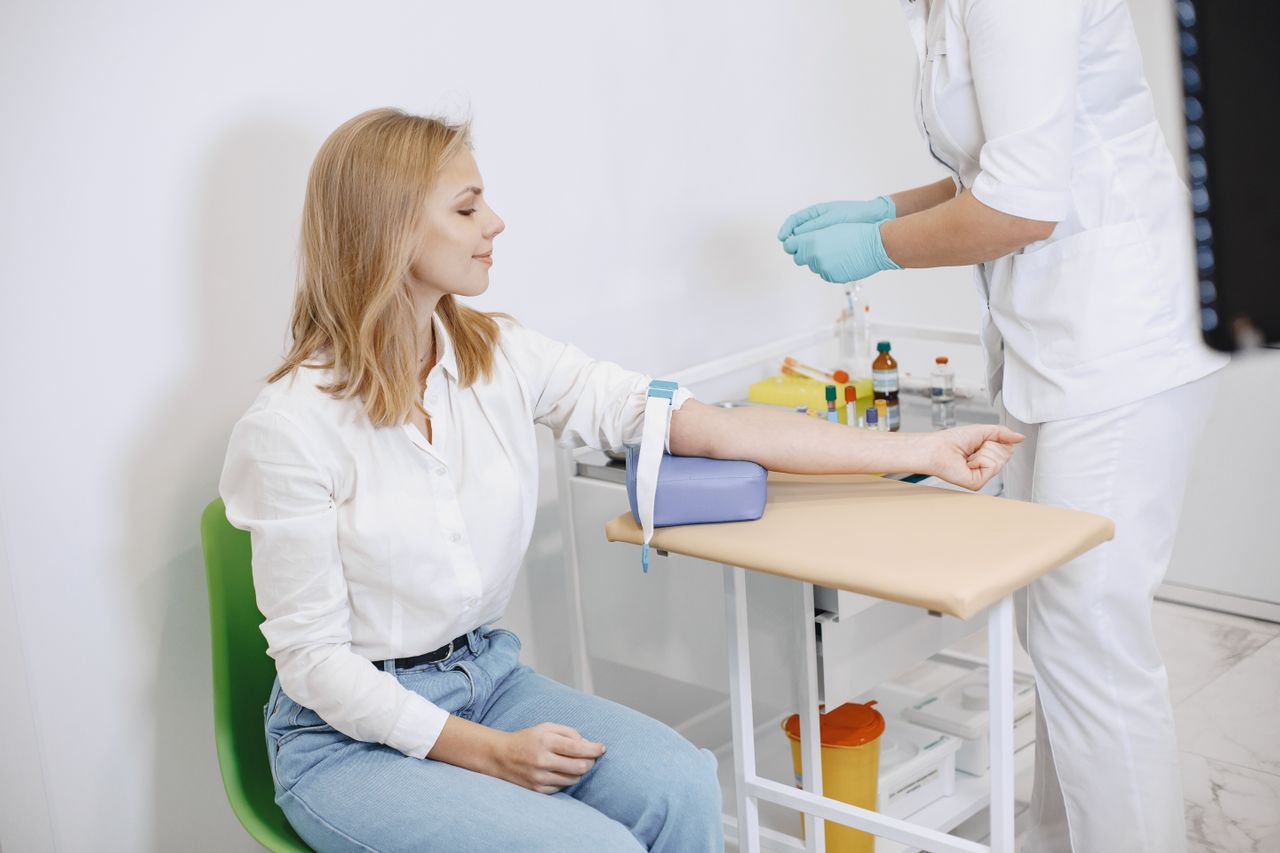

If you have ever gone grey at the edges during a blood test, you have probably been told at some point that you were making a fuss.
You were not. What happened to you is specific, well described, and different in kind from ordinary nervousness — and almost nobody explains it, which is why so many people carry it around as a private embarrassment for decades.
Here is the mechanism. When something frightens us, the usual response is for the body to speed up. Heart rate rises, blood pressure rises, everything gets ready to run or to fight. That is what fear is for.
But with blood, needles and injury, a proportion of people do something different. There is a brief rise, exactly as you would expect — and then the blood pressure falls, sharply. Not gradually. The world goes distant, hearing dulls, the edges of vision grey out, and if nothing intervenes, consciousness follows.
This is a vasovagal response, and it appears to run in families. It is not a failure of nerve, and it is emphatically not something you are doing to yourself.
Which brings me to the advice everybody offers, and why it fails.
“Just relax” is not merely unhelpful here. It is pointing in the wrong direction. Someone whose blood pressure is dropping does not need to be more relaxed — physiologically, for that moment, they need the opposite. This is why the well-meaning phlebotomist telling you to take a deep breath and loosen your shoulders sometimes makes things worse rather than better.
There is a body of work on doing the opposite deliberately — briefly tensing the large muscle groups to keep the pressure up through the moment of the draw. It has a decent evidence base for exactly this presentation, and it is worth asking your doctor or nurse about rather than attempting from a newspaper column. The point I want to make is simpler: the standard advice is aimed at the wrong physiology, so if it has never worked for you, that is not because you are a difficult patient.
Now, the part I can speak to directly.
Underneath the physical response there is nearly always something learned. A first bad experience, often in childhood, often handled briskly by an adult who did not notice how frightened the child was. And once that association forms, it arrives faster than thought. People describe the lurch in the stomach when the appointment card comes through the door — weeks before any needle is involved.
That anticipatory layer is what hypnosis is good at. Not the reflex itself, which is doing what it evolved to do, but the accumulated dread around it that turns a two-minute procedure into a month of poor sleep.
And it is worth dealing with, because the cost is rarely the appointment.
People do not skip a blood test in isolation. They skip the test, so the medication is not monitored, so the dose is not adjusted. Or it was the test that would have caught something early — and instead it is caught late, when the options are fewer and harder. A patient who cannot be tested cannot really be followed, and every decision their doctor makes is made on less than it should be.
Three things you can do at your next appointment, none of which require anything of me.
Say it out loud, before the tourniquet goes on. “I faint at blood draws.” It is a reasonable warning, not a fuss, and it changes how the person in front of you proceeds.
Ask to lie down for it. Most clinics can accommodate this without difficulty, and it removes the distance you would otherwise fall.
Do not look, and do not let anyone talk you into looking on the grounds that it will help. For this particular response, it very often does not.
If the dread has grown beyond the appointment itself — if you are losing sleep over it, or postponing tests you know you need — that is the part worth addressing, and it usually takes less time than people expect.
If you would like to talk through any of this, my contact details are below.
Denise Billen-Mejia, MD CH
Akeso & Aglaia Hypnosis
Dr. Denise Billen-Mejia is a former emergency medicine physician turned clinical hypnotist, dedicated to helping people find relief that conventional medicine alone hasn’t been able to provide.
To explore further, find articles and resources, or get in touch with Denise directl email office@aahypnosis.com or visit her website: healandberadiant.com
For more great health and lifestyle content, see here.
Explore more insights at https://dailytelegraphusa.com/.


















Be First to Comment