


Nature created the sensation of sweetness to confirm the immediate availability of energy needed for metabolic functions. This is not just pleasing—it trains your brain to select foods based on fuel needs. This training is augmented by a reduction in stress hormones released in response to hunger, which helps with the search and procurement of food.
Every sweet bite releases chemicals in the brain that create pleasure and calmness. Over time, the brain learns to connect sweetness with feeling good. However, when you decouple enjoyment from need by eating when not hungry, what starts as an occasional reward slowly becomes an expectation. Eating becomes less about hunger and more about chasing a feeling.

This is what I call the reward cycle.
Repeated intake of sugar wires the brain’s pleasure response to sweetness, even when the body does not actually need fuel. The brain begins to link sweetness with comfort, relief, and emotional safety. Over time, it learns a simple lesson:
Sweet equals relief
Sweet equals comfort
Sweet equals reward
This learning is powerful. The brain is designed to remember what feels good and repeat it. That is how humans survived in environments where food was scarce. But in a world where food is everywhere, that same system becomes a trap.
When stress arises, the brain seeks relief.
When boredom arises, the brain seeks stimulation.
When sadness or fatigue arises, the brain seeks comfort.
And because it has learned that sweetness equals pleasure, comfort and calmness, it suggests food—not because your body needs calories, but because your brain wants a feeling.
This is why people reach for sweets even when they are not hungry. They are responding to a learned emotional pattern, not a biological need for fuel.
Many plans try to break this pattern with force. They say: cut sugar completely, fight cravings, push through discomfort. Some succeed but for others, force creates resistance. The brain does not like losing a reward it depends on. When sugar disappears suddenly, the brain reacts with anxiety, irritability, fatigue, and strong cravings. That is not weakness—it is withdrawal from a learned reward system.

The real solution is not deprivation.
It is a replacement.
You do not break the sweetness-based reward cycle by resisting it. You break it by teaching the brain a better reward system based on the input of many needed nutrients.
When you eat real, nourishing food—food rich in nutrients, healthy fats, and steady energy—the brain begins to experience a different kind of enjoyment. Instead of fast pleasure followed by a crash, it experiences calm energy, a stable mood, and real satisfaction.
Over time, the brain starts to associate eating with long-lasting satisfaction instead of quick pleasure.
This does not happen overnight. The brain needs time and repetition to unlearn the established food intake behavior and to relearn the healthy one. But it does happen.

As blood sugar and nutrients become more stable, several changes begin to appear:
Cravings weaken because the brain is no longer desperate for quick fuel
Hunger becomes clearer and more physical instead of emotional
Emotional eating loses power because food is no longer acting like a drug
People often say, “I just don’t think about food like I used to.” That is not willpower. That is rewiring.
When the body gets steady fuel and nutrients, the brain no longer needs dramatic rewards to feel safe. It stops shouting. It stops bargaining. It stops demanding.
You are no longer chasing food—you are responding to real needs, you are responding to hunger. This is how control returns. Not through punishment, guilt, shame or fear. But through nourishment. When you eat to nourish, you send a new message to the brain: “We are safe. We are fueled. We do not need emergency pleasure.” Over time, the brain believes you.
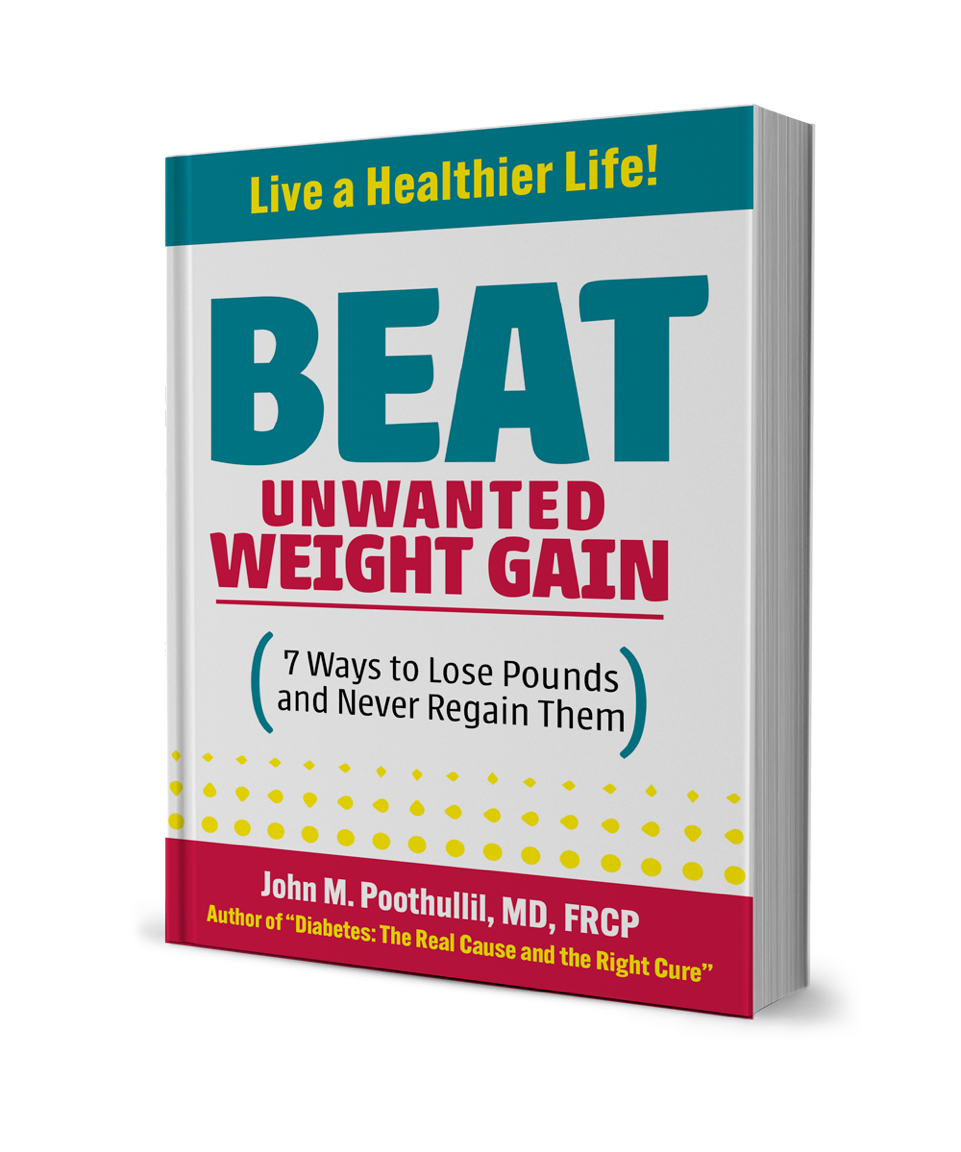
That is the core principle of Beat Unwanted Weight Gain: when you feed the body correctly, the brain stops fighting you.
Weight maintenance becomes possible not because you are forcing it, but because the system is no longer in chaos. Hunger becomes reasonable. Cravings become quiet. Choice becomes possible. Eating becomes enjoyable even without sweetness in every bite.
This is not about perfection. It is about direction. Each bite that nourishes the brain teaches it something new. Enjoyment is more closely related to the duration of nutrient-receptor contact in the mouth than to the feeling of fullness in the mouth. Each day of steady fuel makes the reward cycle weaker, even when you take smaller bites.
You do not have to be at war with food. You can change your relationship with it.
Food can be satisfaction, not temptation.
Eating can be nourishment, not negotiation.
Hunger can be a signal, not an emergency.
When the reward cycle breaks, freedom returns.
Next in the series:
Why Willpower Isn’t Enough
John Poothullil practiced medicine as a pediatrician and allergist for more than 30 years, with 27 of those years in the state of Texas. He received his medical degree from the University of Kerala, India in 1968, after which he did two years of medical residency in Washington, DC and Phoenix, AZ and two years of fellowship, one in Milwaukee, Wisconsin and the other in Ontario, Canada. He began his practice in 1974 and retired in 2008. He holds certifications from the American Board of Pediatrics, The American Board of Allergy & Immunology, and the Canadian Board of Pediatrics.During his medical practice, John became interested in understanding the causes of and interconnections between hunger, satiation, and weight gain. His interest turned into a passion and a multi-decade personal study and research project that led him to read many medical journal articles, medical textbooks, and other scholarly works in biology, biochemistry, physiology, endocrinology, and cellular metabolic functions. This eventually guided Dr. Poothullil to investigate the theory of insulin resistance as it relates to diabetes. Recognizing that this theory was illogical, he spent a few years rethinking the biology behind high blood sugar and finally developed the fatty acid burn switch as the real cause of diabetes.Dr. Poothullil has written articles on hunger and satiation, weight loss, diabetes, and the senses of taste and smell. His articles have been published in medical journals such as Physiology and Behavior, Neuroscience and Biobehavioral Reviews, Journal of Women’s Health, Journal of Applied Research, Nutrition, and Nutritional Neuroscience. His work has been quoted in Woman’s Day, Fitness, Red Book and Woman’s World.Dr. Poothullil resides in Portland, OR and is available for phone and live interviews.To learn more buy the books at: amazon.com/author/drjohnpoothullil
Visit drjohnonhealth.com to learn more. You can also contact him at john@drhohnonhealth.com.
Or follow us on:
Instagram: instagram.com/DrJohnOnHealth
Facebook: facebook.com/JohnOnHealth
Youtube : @DrJohnPoothullil
For more great lifestyle content, see here.
Explore more insights at https://dailytelegraphusa.com/.


















Be First to Comment