

Key Takeaways
- Prioritize a walk-in bathtub with a low step-in threshold, stable seat height, and secure floor grip, since those three details do more for safe bathing than flashy add-ons.
- Check how the walk-in tub handles real daily use—fast fill, fast drain, anti-scald controls, and reachable shower settings matter more than showroom pictures.
- Measure the whole bathroom before choosing a walk-in bathtub, especially in small bathrooms or alcove spaces where door swing, transfer room, and wall surround limits can rule out a model fast.
- Match therapy features to the person, not the ad: jets, heated back support, and air massage can help some seniors, but they don’t fix poor access or weak balance.
- Price the full project, not just the bathtub, because install costs often rise once plumbing, electrical work, surround panels, or tub-to-shower combo changes enter the plan.
- Compare walk-in tubs by bathing routine, shower habits, and mobility needs, since the best setup for an elderly parent staying independent at home isn’t always the most expensive or most modern option.
One bathroom fall can change a family’s timeline overnight. It’s risky.
In practice, the right tub can support bathing with less strain, better balance, and more dignity. The wrong one can create a new set of problems: long wait times, hard-to-read controls, awkward transfers, even features that look great in pictures — don’t match how an older adult actually bathes day to day. That gap matters. A lot. Families aren’t just shopping for a bath fixture in 2026; they’re making a home safety decision that affects independence, pain management, and whether a parent can keep bathing without hands-on help.
Why the right walk-in bathtub matters more for safe bathing at home in 2026
After a near fall, the pattern is familiar: an older parent says they’re fine, the adult child isn’t so sure, and the old tub-shower combo suddenly looks risky. That’s usually when a walk-in bathtub stops feeling optional and starts looking like a safety decision.
In practice, the right model supports balance, easier transfers, and safer bathing inside the home—especially for seniors who want to stay independent. A basic bath swap won’t do that on its own.
Why adult children are researching walk-in tubs earlier after a fall scare
One slip changes the timeline. Families now research walkin bathtub options before the next incident, not after, because bathroom falls often happen during routine steps like turning, stepping over an alcove wall, or standing up from a wet bathtub.
They’re also comparing step in tubs, shower conversions, and a walk in jetted tub that adds comfort for stiff joints.
Sounds minor. It isn’t.
Who a walk-in bathtub helps most: seniors, elderly adults, and people staying independent at home
The best fit is usually someone with arthritis, poor balance, fatigue, or trouble lifting a leg over a high bath surround. An aging in place walk-in tub can help elderly adults who still manage daily tasks but need safer entry, a seat, — controls they can reach without awkward twisting.
- Best candidates: people with joint pain, weakness, or recent fall history
- Less useful: people who can’t transfer safely even with help
Why a walk-in tub isn’t just a bath upgrade but a home safety decision
Looks matter less than function. A freestanding bathtub, freestanding jetted tub, or freestanding tub with jets may suit modern bathrooms, but safe bathing depends on threshold height, seat depth, grab points, — drain speed—not just luxury jets or pictures in a showroom.
Search intent: what people want to know before choosing a walk-in bathtub
About 1 in 4 adults over 65 reports a fall each year, and the bathroom stays one of the highest-risk spaces—yet buyers still get distracted by pretty pictures before they check entry height, seat depth, and drain speed. That’s the wrong order. A walk-in bathtub is built for walk access through a watertight door, while standard bathtubs, showers, and combo units still ask the bather to step over a tub wall or stand through the whole bath.
What a walk-in bathtub is and how it differs from standard bathtubs, showers, and combo units
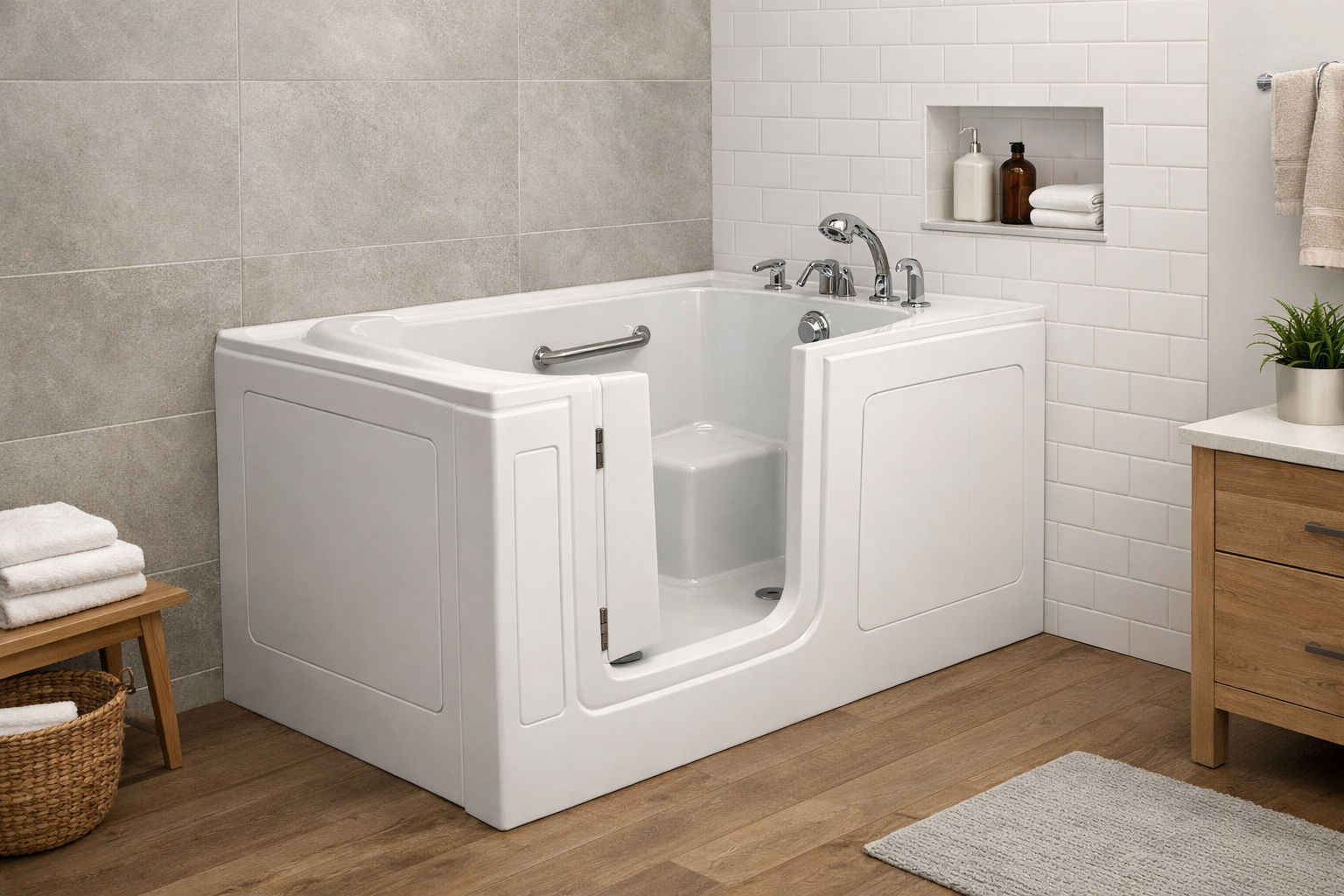
In practice, the biggest difference is transfer safety. A walkin bathtub has an inward-opening or outward-opening door, a built-in seat, and controls placed where an elderly user can reach them from inside. By contrast, a freestanding bathtub may look modern and luxury-focused, but it isn’t designed for seniors who need stable entry and seated bathing.
The basic types of walk-in tubs: soaking, hydrotherapy jets, bariatric, and shower combo models
Most buyers will run into four basic tubs:
- Soaking models for warm bath comfort
- walk in jetted tub options with air or water jets
- step in tubs with wider doors and higher weight capacity
- Shower combo units for homes that need bath and shower use inside one enclosed space
A freestanding jetted tub or freestanding tub with jets can help with soreness, but it still doesn’t solve the same access problem.
Not complicated — just easy to overlook.
Where walk-in bathtub pictures, ideas, and showroom photos can mislead buyers
Photos can hide the basics. A large bath surround may look polished in showroom shots, but buyers should ask for exact dimensions, installed door swing, fill time, and drain time—especially in small bathrooms. One brief expert note from ANZZI has made the same point: the right aging in place walk-in tub supports independent bathing, not just good design.
7 walk-in bathtub features occupational therapists say matter most
Like a smart coffee chat: skip showroom flash and check the parts that keep an older adult safe, comfortable, and independent at home. In practice, the right walk-in bathtub is less about luxury pictures and more about daily use.
1. Low step-in threshold and wide inward door for safer walk-in access
A low entry matters. For seniors — elderly adults with weak hip flexion, even a 4- to 7-inch rise can decide whether a bath feels possible. A true walkin bathtub should allow a stable walk inside without twisting.
2. Built-in seat height, transfer space, and inside floor grip that support independent bathing
Seat height should match a safe chair transfer—usually about 17 to 19 inches. Good step in tubs also need floor grip and clear transfer room, especially in small bathrooms or an alcove combo setup.
3. Fast fill, fast drain, and anti-scald controls that reduce wait time and risk
Here’s what most people miss: users sit inside while the tub fills and drains. Fast systems help. Anti-scald valves do too—and they should. Long waits raise cold stress and frustration.
4. Grab bar placement, handheld shower reach, and easy-to-read controls that work for aging hands
Controls must be visible, simple, and reachable from the seat. The handheld shower should reach the lower legs and feet without overreaching (that’s where slips happen).
That gap matters more than most realize.
5. Jets, air massage, and heated back support: when therapy features help and when they don’t
A walk in jetted tub can ease stiffness, — not every parent needs jets. Some prefer quiet soaking; others ask about a freestanding jetted tub, a freestanding tub with jets, or even a freestanding bathtub—but those don’t replace low-entry access. An aging in place walk-in tub works better for balance limits.
6. Door seal, enclosed surround, and leak control details that affect day-to-day use
Small details. Big difference. A solid seal, enclosed surround, and dependable latch prevent the kind of daily leak issue that makes families regret what they installed.
7. Size fit for small bathrooms, alcove layouts, and stand alone or freestanding installation limits
Realistically, size drives the whole plan—drain location, door swing, and transfer side included. A standard tub space may fit a walk-in bathtub, while a freestanding jetted tub or large stand alone bath often needs a different bathroom layout entirely.
What a walk-in bathtub really costs to buy and have installed
What does a walk-in bathtub actually cost in 2026? The honest answer is this: most families are looking at a wide range, and the tub itself is only part of the bill.
Average walk-in bathtub price ranges in 2026 for basic, modern, luxury, and large tubs
A basic walkin bathtub or one of the simpler step in tubs often starts around $2,500 to $5,000. A more modern model with a shower combo, heated backrest, and easier controls usually lands closer to $5,500 to $9,000. Large bathtubs with jets, an enclosed bath door, or a walk in jetted tub setup can run $9,000 to $14,000.
Some families compare those numbers with a freestanding bathtub or a freestanding jetted tub, — entry safety changes the equation. For buyers who still want spa-style ideas, freestanding tub with jets models are usually priced differently from senior-focused tubs.
What installation changes can raise cost: plumbing, electrical, wall surround, and convert work
Installed price climbs fast if the bathroom needs changes. The big cost drivers are:
- Plumbing moves: $800 to $2,500
- Electrical for heaters or jets: $600 to $1,800
- Wall surround repair after old shower or bathtub removal: $1,000 to $3,000
- Convert work for small alcove bathrooms: often the toughest part
Why cheap and affordable walk-in bathtubs can cost more later if the fit is wrong
Cheap isn’t always cheap. If an aging in place walk-in tub is too tall inside, too narrow for transfers, or slow to drain, the person may stop using it — — that defeats the whole point of staying independent at home.
It’s a small distinction with a big impact.
How families can compare walk-in bathtub options without getting distracted by extras
Extras sell.
But glossy pictures, chromatherapy, and luxury add-ons can pull families away from the features that actually keep an older adult safe inside the bathroom. The better question is simpler: will this walk-in bathtub support daily bathing, shower use, and independence six months from now?
A practical checklist for judging safety, comfort, and bathroom fit before purchase
An occupational therapist would usually start with function—not finish. A walkin bathtub should be judged on:
- Door sill height and seat height for safe walk-in entry
- Fast drain and fill times, since waiting 6 to 10 minutes can feel long
- Slip resistance, grab bar placement, and easy-to-read controls
- Bathroom fit: alcove, enclosed surround, or a combo bath-and-shower setup
A freestanding bathtub may look modern, and a freestanding jetted tub or freestanding tub with jets can feel appealing—but they usually don’t solve step-over risk for seniors or elderly users.
It’s not the only factor, but it’s close.
Questions to ask about bathing routine, shower use, caregiver help, and long-term mobility
Ask the parent: do they still prefer showers, or do they take a seated bath three times a week? If caregiver help is likely, step in tubs need enough inside room for transfers — hand placement—small bathrooms can make that hard.
The honest tradeoffs: what a walk-in tub does well, what it doesn’t, and who may need another bathing setup
Here’s what most people miss: a walk in jetted tub can ease joint pain and support aging in place walk-in tub planning, yet it won’t work for every home. If someone can’t tolerate sitting during fill and drain time—or needs quick stand-up shower access—a low-threshold shower may fit better.
Frequently Asked Questions
What are the negatives of a walk-in tub?
A walk-in bathtub can be a great safety upgrade, but it isn’t perfect. The biggest drawbacks are wait time and cost—you have to sit inside the tub while it fills and again while it drains, and installation is usually more expensive than swapping in a basic bathtub or shower combo. Some models also need bathroom layout changes, a larger water heater, or electrical work for jets and heated features.
Will Medicare pay for a walk-in tub?
Usually, no. Original Medicare doesn’t often cover a walk-in bathtub because it’s often treated as a home modification rather than durable medical equipment. The honest answer is that some Medicare Advantage plans, Medicaid programs, long-term care policies, or HSA/FSA funds may help, so families should check plan details before buying.
What is the average cost of having a walk-in tub installed?
For most homes, installed cost lands somewhere between $5,000 and $15,000. A basic walk-in bathtub with standard features sits at the lower end, while luxury tubs with hydrotherapy jets, quick-drain systems, heated seats, and extra plumbing or electrical work push the total much higher.
What is the average price of a walk-in bathtub?
The tub itself often runs about $2,500 to $8,500 before labor.
Price depends on size, door style, soaking depth, shell design, and whether the unit includes air jets, whirlpool jets, a shower wand, or a walk-in shower and tub combo setup.
Sounds minor. It isn’t.
Are walk-in bathtubs good for seniors who want to stay independent at home?
Yes—if the fit is right for the person using it. A walk-in bathtub lowers step-over height, gives seniors a seated bathing option, and can reduce fall risk inside the bathroom, which is one of the main reasons families start looking at these tubs in the first place. But safety still depends on the full setup: grab bars, flooring, transfer space, and how easily the person can get in, sit down, stand up, and get out.
How long does a walk-in tub take to fill and drain?
Most fill in roughly 6 to 15 minutes and drain in about 4 to 10, though fast-drain systems can shorten that. That matters more than people expect. If an elderly parent gets chilled easily, a model with an inline heater can make the bathing experience far more comfortable.
Can a walk-in bathtub include a shower too?
Yes, some units work as a walk-in tub and shower combo, with a handheld shower head or an enclosed shower screen for rinsing. That setup can be useful in small bathrooms where the family wants one bathing space to serve different needs, but the wall height and entry design still need to match the user’s mobility.
Do walk-in tubs need a lot of bathroom space?
Not always. Plenty of walk-in bathtub models are built to fit into an alcove where a standard bath already sits, though some large or freestanding-style units need more room around the door and more clear floor space for safe entry. Pictures can be misleading—actual dimensions and door swing matter more than showroom photos.
Are jets worth paying for in a walk-in bathtub?
Sometimes yes, sometimes no. Air and water jets can help with stiffness, arthritis pain, and general comfort, but they also raise the price and add cleaning and maintenance tasks. In practice, families should treat jets as a comfort feature, not the main reason to buy the tub.
Can a regular bathtub be converted into a walk-in tub?
Sometimes a standard bathtub can be replaced with a walk-in model in the same footprint, but a true convert job isn’t always simple. Plumbing location, door clearance, wall surround condition, and floor support all affect whether the old bath can be turned into a safe walk-in setup without bigger bathroom work.
The right bathing setup can buy something families care about more than comfort: time at home with less risk. That’s why the best walk-in bathtub choices usually come down to three plain questions. Can a parent get in and out without a high, risky step? Can they sit, reach the controls, and bathe without awkward twisting or hand strain? And can the tub fill and drain fast enough that the routine still feels practical, not exhausting?
Looks matter less than use.
A glossy product photo won’t show whether the seat height fits a real transfer, whether the grab bar is in the right spot, or whether the bathroom has enough room for the door swing and plumbing changes that installation may require. That’s the stuff that decides if a tub supports independence—or turns into an expensive compromise.
Before anyone buys, they should measure the bathroom, write down the parent’s full bathing routine, and review those details with a licensed occupational therapist and installer. That next step will save money, reduce risk, and lead to a safer decision.
For more, check out Toyota Extended Warranty Questions First-Time Used-Car Buyers Should Ask.


















Be First to Comment