
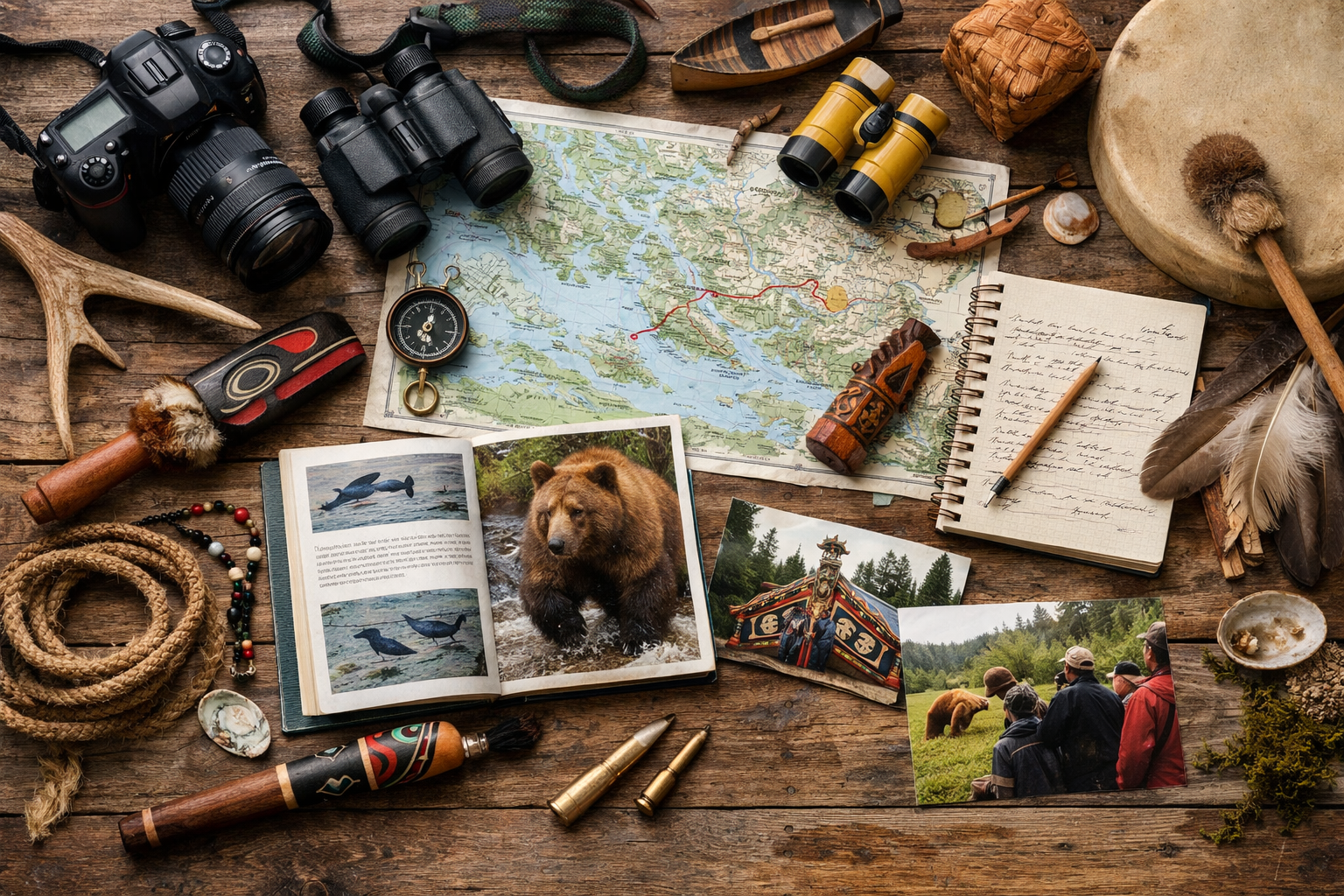

Key Takeaways
- Prioritize an Alaska bear viewing tour led by Indigenous guides if cultural context matters as much as the bear sighting; the best trips connect animal behavior, land knowledge, and living community history.
- Check group size before booking any bear viewing tour, because smaller van-based trips usually allow longer stops, better viewing angles, and more room for questions than high-volume excursions.
- Expect weather and wildlife timing to shape the day on an Alaska bear viewing tour; salmon movement, road conditions, and rain can all shift where bears appear and how long a stop lasts.
- Ask direct questions about who leads the tour and where the storytelling comes from, since a community-led bear viewing tour should reflect lived knowledge rather than a recycled script.
- Plan around return timing and mobility needs before a cruise-day bear viewing tour, especially for photographers, older travelers, and family groups who need comfort, flexibility, and clear logistics.
- Remember that no honest bear viewing operator can promise bears on cue; the strongest Alaska wildlife tours still deliver value through local history, field insight, and a fuller sense of place.
Wildlife travel is changing fast. Travelers once satisfied with a quick bear photo from a crowded coach now want something harder to fake: context, accountability, and a guide whose knowledge comes from family, not a script. That shift is exactly why searches around Icy strait alaska Bear viewing Tour carry more weight than the old excursion model ever did. The draw isn’t only the chance to spot a brown bear in the wild. It’s the chance to understand what that sighting means in a living cultural setting—who knows the land, who speaks for it, and who benefits when visitors arrive.
For cultural travelers, that distinction matters. A bear sighting can last thirty seconds; the story behind that moment stays much longer. In practice, the strongest wildlife outings now pair field knowledge with Indigenous storytelling, smaller groups, and honest expectations about weather, timing, and animal behavior (yes, that honesty matters). The result feels less like a checklist stop and more like real travel. And in a market crowded with interchangeable Alaska tours, that difference is starting to decide where serious travelers book—and where they don’t.
Why bear viewing travel is shifting toward Indigenous-led experiences
What are cultural travelers really looking for now from a wildlife day ashore? The short answer: context, credibility, and a guide whose knowledge comes from lived relationship with the land—not a script. Interest in an Icy strait alaska Bear Tour now tends to track with a deeper search for story, ethics, and smaller-group access.
What cultural travelers now expect from a bear viewing tour
Travelers searching for an Icy strait alaska Bear viewing Tour aren’t just hoping to spot a bear near a river or forest edge. They want a full Icy strait alaska Wildlife Tour that explains black bear behavior, coastal brown bear movement, weather patterns, salmon timing, and why wild encounters can’t be reduced to a checklist.
Why local storytelling changes the meaning of wildlife travel
An Icy strait alaska Brown Bear Tour carries more weight when the guide can connect animal movement, seasonal food sources, and cultural memory in one conversation.
How smaller group formats reshape the day in the field
Small-group travel changes the rhythm of an Icy strait alaska Coastal Brown Bear Tour—less waiting, more listening, better sightlines, and room for real questions. For first-timers, an Icy Strait Alaska excursions guide for first-timers should point to three markers:
- Local interpretation tied to place and season
- Low-impact pacing that respects wild bears
- Group size small enough for actual conversation
That shift matters. It turns bear viewing from a pass-by photo stop into a grounded encounter people remember for the right reasons.
What to look for in an Alaska bear viewing tour before booking
Not every bear trip deserves a booking.
- Match the trip to the traveler’s real goal. Search intent is plain: people looking for an Icy strait alaska Bear viewing Tour usually want wild bear viewing, local context, and enough time to watch behavior rather than just chase a sighting. That matters more than flashy branding or a long gear list.
- Look for ethical field practice. A strong operator keeps distance, avoids crowding a mama bear with cubs, and doesn’t turn a river stop into a circus. In practice, the best guides explain weather, salmon timing, and why a black bear or coastal brown bear may stay out of view. That honesty matters.
- Check whether the experience is rooted in community. A true Icy strait alaska Brown Bear Tour should be led by people with lived knowledge of the place, not a script copied from a lodge brochure. Ask who guides the trip, who owns the company, and where visitor spending lands.
Search intent: what travelers want from a bear viewing tour
Most travelers comparing an Icy strait alaska Bear Tour, an Icy strait alaska Coastal Brown Bear Tour, or an Icy strait alaska Wildlife Tour aren’t chasing a theme-park moment. They want a wild bear encounter with real interpretation.
Signs of an ethical wildlife viewing operator
Good signs are simple: small groups, patient pacing, no baiting, — clear language about animal behavior. If the pitch sounds like Yellowstone, Katmai, Brooks Falls, or a mountain park highlight reel, pause.
Questions that reveal whether a tour is truly community-led
One sharp test helps: ask whether the trip belongs in an Icy Strait Alaska excursions guide for first-timers because it teaches living culture, or just because it fills three hours. The honest answer separates marketing from stewardship.
Simple idea. Harder to get right than it sounds.
Before booking, check who leads the outing, how group size is handled, and what kind of wildlife access is realistic for the day. A strong Alaskan bear viewing tour in Icy Strait Point should state plainly how local knowledge, safety practice, and time on the ground shape the trip.
Bear viewing tour conditions: wildlife timing, weather, and sighting expectations
Brown bears can be dense in coastal forest habitat—at times one to two bears per square mile—yet a strong wildlife day can still turn quiet fast. That’s the core truth behind any Icy strait alaska Bear viewing Tour: animal movement follows salmon, scent, tide, and weather, not a schedule.
Seasonal patterns that shape bear activity
During midsummer salmon runs, a bear may stay near a river crossing for hours; in spring, feeding shifts toward sedge flats and shoreline patches. An Icy strait alaska Coastal Brown Bear Tour makes the most sense for travelers who want context on how brown bear and black bear behavior changes across the season, rather than a staged quest for a single photo.
In practice, three patterns matter most:
- Early season: fresh green forage, wider roaming
- Peak salmon timing: better odds near creeks and lake outlets
- Late season: feeding intensifies before winter sleeping cycles
Weather, road access, and how the day can change fast
Rain often helps by cooling the road and muting human noise, but heavy fog can flatten visibility in minutes. On an Icy strait alaska Wildlife Tour, a clear morning can shift by noon—low cloud, slick gravel, and wind can alter where guides stop and how long they wait at a viewing pullout.
Why no honest bear viewing tour can promise sightings
The honest answer is simple: wild means wild. An Icy strait alaska Bear Tour, an Icy strait alaska Brown Bear Tour, or even an Icy Strait Alaska excursions guide for first-timers can set smart expectations, but no ethical operator should promise a bear, grizzly-scale moment, or a Katmai-style scene on demand. And that’s a good sign.
That gap matters more than most realize.
The difference between mass-market excursions and Indigenous-led bear viewing tours
Over coffee, here’s the plain truth: not every bear trip tells visitors much about the place they’re moving through. The gap between a big-bus outing and an Indigenous-led small-group drive isn’t just comfort or crowd size. It’s knowledge that comes from family memory, seasonal observation, and daily life around wild country.
Scripted narration versus lived knowledge
A scripted guide can list facts about bear habitat, salmon runs, and weather patterns. Lived knowledge goes farther—it explains why bears favor one river bend after late snow, how black and brown bears move differently near a lake edge, and what a visitor is actually seeing in the forest. That’s the value travelers hope for in an Icy strait alaska Bear Tour or an Icy strait alaska Brown Bear Tour.
Bus crowds, short stops, and the limits of high-volume excursions
High-volume excursions often run on a hard clock: load, stop, photo, move. That format works for throughput, not attention. On a crowded bus, half the group misses the bear crossing because the sightline is wrong, the stop is too short, or the narration is still rolling as the animal slips back into brush.
- Smaller groups hear better and ask sharper questions.
- Longer pauses improve viewing and photography.
- Local judgment matters more than a script.
Why cultural context matters as much as the bear sighting itself
For travelers comparing an Icy strait alaska Coastal Brown Bear Tour with a generic wildlife outing, cultural context often decides whether the day feels thin or lasting. An Icy strait alaska Wildlife Tour led by people tied to the land can turn one bear sighting into a fuller story about salmon, forest stewardship, and why respectful viewing matters.
Planning a bear viewing tour for a cruise stop without losing the day
Port time disappears fast.
That’s the tension every cruise traveler feels: one late return can wreck the whole stop, yet the right plan turns an Icy strait alaska Bear viewing Tour into the day people talk about long after the ship sails.
How to judge timing, return reliability, and port-day logistics
Start with three checks:
- Total duration: stay near the actual port window, not the advertised adventure window.
- Return record: ask how often guests miss all-aboard. The honest answer should be zero.
- Transit friction: long walks, shuttle transfers, and staging delays can eat 30 to 45 minutes.
An Icy strait alaska Wildlife Tour works best when pickup, route, and drop-off are simple—especially in wet weather, when traffic around the dock area can slow everything down.
No shortcuts here — this step actually counts.
What photographers, older travelers, and multigenerational groups should check
Different travelers need different things. Photographers on an Icy strait alaska Brown Bear Tour should ask about window glare, stop length, and whether guides pause for eagles, river crossings, or a mama bear with cubs. Older travelers should look for short walks, stable vehicle boarding, and clear pacing. Families spanning three generations usually do better on an Icy strait alaska Coastal Brown Bear Tour with small groups, because questions don’t get lost in the shuffle.
What makes a bear viewing tour feel memorable after the wildlife moment passes
Here’s what most people miss: the sighting isn’t the whole story. A strong Icy strait alaska Bear Tour stays with people because the guide explains tracks, salmon timing, forest patterns, and what it means to live near wild bears.
Frequently Asked Questions
What is an Icy strait alaska Bear viewing Tour like?
An Icy strait alaska Bear viewing Tour is usually a small-group wildlife outing focused on spotting bears in their natural habitat from roadsides, safe pullouts, and short walking areas. The strongest trips add local storytelling, forest ecology, and context about salmon streams, weather, and how people have lived alongside wild bears for generations.
What kind of bears might travelers see?
Most travelers hope to see brown bears, and some guides may also talk about black bear habitat if that species is present in the wider region. The honest answer is that guides can’t promise a grizzly-style photo moment every day, but skilled local guides know how to read river movement, tracks, and feeding patterns.
When is the best time for bear viewing?
Peak viewing often lines up with salmon activity, because bears follow food. Midseason tends to bring the strongest bear viewing conditions—though weather, water levels, and berry cycles can shift animal movement fast.
Are bear sightings guaranteed on a bear viewing tour?
No. Any operator claiming guaranteed wild bear sightings deserves a hard second look.
Not complicated — just easy to overlook.
Bears aren’t zoo animals, and that’s the point.
Is this type of tour safe for older travelers or families?
Usually, yes. Most bear viewing tour formats rely on vehicle travel with brief stops rather than long hikes, which makes them a better fit for mixed-age groups, grandparents, and travelers who want wild country without a punishing day.
What should travelers wear for an Icy strait alaska Bear viewing Tour?
Dress in layers, and don’t overthink it. A waterproof shell, warm mid-layer, comfortable shoes, and a hat matter more than fancy outdoor branding—weather can turn cold, damp, and windy in one outing, even if the morning starts calm.
How close do tours get to the bears?
Responsible guides keep distance and follow wildlife rules, even when guests want the dramatic close shot. Realistically, the best operators prioritize animal behavior over tourist expectations, because one rushed approach can ruin the viewing for everyone and stress a mama bear with cubs.
Real results depend on getting this right.
What makes a good bear viewing tour different from a mass-market excursion?
Small groups. That’s the big one.
A better bear viewing tour leaves room for questions, longer wildlife stops, — actual local interpretation instead of canned narration. It also helps if the guide can connect bear habitat to forest health, river systems, and Indigenous history rather than turning the whole day into a checklist.
Should travelers bring binoculars or a camera?
Yes—both, if possible.
Binoculars help with distant bears near a riverbank or tree line, and a camera with some zoom is far better than relying on a phone, especially in flat light, rain, or low cloud hanging over mountain edges.
Can a bear viewing trip still be worth it without a bear sighting?
Absolutely, if the tour is built well. The best outings aren’t just a quest for one animal; they’re a way to understand wild country, local lifeways, salmon ecosystems, and why bears matter in the first place (that’s what most rushed excursions miss).
Bear travel has changed, and that shift is overdue. Cultural travelers aren’t just chasing a wildlife sighting anymore; they’re paying closer attention to who is telling the story, how the day is structured, and whether the experience reflects a living community rather than a scripted stop. An Icy strait alaska Bear viewing Tour stands out most when it pairs ethical wildlife practices with local knowledge that can’t be copied from a training manual.
That matters for practical reasons too. Honest operators won’t promise animals on cue, and strong planning still comes down to timing, return reliability, group size, and the kind of guiding that adapts when weather or animal movement changes fast. The best days in the field don’t feel rushed—they leave travelers with context, not just photos.
That’s the trip worth remembering.
Travelers comparing small-group wildlife outings are paying closer attention to guide expertise, ethical viewing distance, and how well an operator explains timing, terrain, and animal behavior before departure.
For more great reading, visit our site and explore related topics.


















Be First to Comment