

Authored by Dave Sarro founder and CEO of Promo Direct

Brand building today looks very different from what it did even a decade ago. Younger leaders, especially from Gen Z, are placing more weight on alignment, values, and long-term impact when making marketing decisions. This shift is also changing how companies think about merchandise and everyday branding choices.
For many of these leaders, a simple giveaway is no longer just a tool for visibility. It is a reflection of what the brand stands for. That is why sustainable promotional products are becoming central to modern brand strategy rather than an afterthought.
Values are no longer optional in brand decisions
Gen Z leaders tend to approach business decisions with a strong awareness of environmental and social impact. That mindset naturally extends into marketing choices as well. Traditional promotional products that are single-use or low durability are often seen as disconnected from modern brand identity.
Instead, there is growing preference for merchandise that reflects responsibility in a visible and practical way. This is where sustainable promotional items are gaining traction. They signal intent without needing explanation.
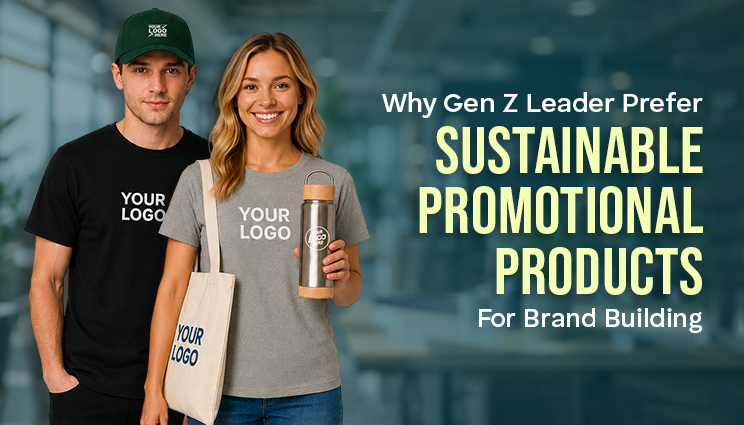
A reusable bottle, a recycled notebook, or an eco-friendly tote bag is not just a giveaway. It becomes a quiet statement about how the company operates.
Functionality matters more than novelty
One of the clearest shifts in Gen Z-led brand thinking is the move away from novelty items. Flashy, gimmicky giveaways tend to lose relevance quickly. Instead, usefulness is becoming the real measure of value.
This is where sustainable promotional products play a stronger role. Items designed for repeated use naturally stay in circulation longer and become part of daily routines rather than temporary distractions.
A well-made insulated cup, a recycled fabric tote, or a bamboo desk accessory does not sit in storage. It becomes something people reach for without thinking.
For Gen Z leaders, this matters because every item distributed is seen as part of a longer brand story. If the product is used regularly, the brand stays visible in a natural and meaningful way.
Subtle branding creates stronger connection
Another noticeable preference among Gen Z leaders is restraint in branding. Loud logos and overly promotional designs are often less appealing than subtle, thoughtful placement.
With sustainable promotional gifts, the focus shifts from constant visibility to consistent presence. A product that blends into someone’s life is more likely to be accepted, used, and appreciated.
For example, a custom recycled cotton tote with minimal branding can travel from grocery stores to co-working spaces without feeling intrusive. A promotional stainless steel bottle used at a desk becomes part of someone’s daily environment rather than a marketing tool.
Sustainability as a trust signal, not a trend
Gen Z leaders are often skeptical of surface-level sustainability claims. They look for consistency across actions, not just messaging. That is why sustainable promotional products are not treated as a trend but as a trust-building tool.
When a company invests in eco-conscious materials, responsible sourcing, or reusable alternatives, it signals that sustainability is embedded in decision-making rather than added later for marketing purposes.
Even when audiences do not consciously analyze product materials, they often associate thoughtful merchandise with a thoughtful company.
Experience-driven branding over mass distribution
Traditional promotional strategies often focused on scale. The goal was to distribute as many items as possible. Gen Z-led approaches tend to prioritize experience instead.
Instead of large volumes of generic items, there is growing preference for sustainable promotional items that feel curated and intentional.
A smaller number of well-chosen products can create a stronger impression than thousands of forgettable ones. This is especially relevant in events, campus programs, and community engagement campaigns where experience matters more than quantity.
Everyday integration is the real goal
One of the most important shifts in thinking is the idea that promotional products should not feel like promotional products at all.
Gen Z leaders often evaluate merchandise based on whether it fits naturally into everyday life. If a product is useful at home, at work, or on the move, it is more likely to succeed as a branding tool.
This is where sustainable promotional gifts play a strong role. Their value extends beyond distribution into repeated use and daily visibility.
A well-designed imprinted eco-friendly notebook may sit on a desk for months. A reusable bottle may move between meetings, gyms, and commutes. Each interaction quietly reinforces the brand.
A shift from impressions to relationships
Perhaps the most significant change Gen Z leaders are driving is the shift from impression-based thinking to relationship-based branding.
It is no longer enough for a product to be seen once. It needs to remain relevant over time. This is why sustainable promotional products are gaining momentum in modern brand strategy discussions.
They support a slower, more intentional form of marketing. One where the goal is not just exposure, but familiarity and trust.
Final thought
Gen Z leadership is not rejecting promotional products. Instead, it is redefining their purpose. The focus is shifting toward usefulness, responsibility, and long-term brand presence.
In that context, sustainable promotional items and sustainable promotional gifts are not just better choices. They are becoming expected standards.
Brands that understand this shift early are likely to find that their merchandise does more than promote. It becomes part of everyday life, quietly strengthening connection over time.
→ Don’t miss our latest updates — visit the main site.
















Be First to Comment