

Key Takeaways
- Measure mailer storage by pallet footprint, shelf depth, and touches per order before changing formats; a flat-pack mailer often frees enough space to add more active SKUs without adding racking.
- Match the mailer to the item profile instead of defaulting to one format for every order; corrugated mailers suit books and prints, while poly or bubble-lined mailer options fit soft goods and lighter breakables.
- Cut pack-bench time by testing flat-pack mailer assembly speed against cartons; in live fulfillment, even a 5 to 10 second gain per order can change labor planning fast.
- Buy mailer sizes around real order data, not guesswork; pull 30 to 60 days of shipment history and rank the item dimensions that cover the biggest share of volume before placing a bulk order.
- Reduce rework with a mailer that fits the product closely and needs less dunnage; tighter pack-out usually means fewer oversized shipments, cleaner handoff, and fewer damage claims.
- Build a mailer scorecard before seasonal spikes hit; compare cube usage, replenishment frequency, unit cost, damage rate, and returns handling so the format earns its spot in the line.
Warehouse teams don’t run out of labor first. They run out of space. That’s why the flat-pack mailer has moved from a niche packaging choice to a serious operations fix for growing online retailers, especially in facilities where every rack bay, end cap, and pack bench already feels overcommitted.
In practice, a carton that ships fine can still be the wrong call if it eats storage, slows replenishment, and forces packers into extra touches all day long. A flat-pack format changes that math fast—hundreds of units can sit in the footprint that a much smaller count of erected boxes would claim, and that has a direct effect on pick flow, bulk purchasing, and pack station speed. But here’s the thing: not every mailer earns its keep. The ones that work are matched to the item profile, the order mix, and the actual pressure points inside the operation (not the catalog description). That’s where smart teams are starting to separate real savings from packaging guesswork.
What a mailer means now for warehouse and fulfillment teams
How the term mailer shifted from inbox and email language to physical shipping
Over coffee, here’s the simple version: a mailer used to send people toward email, login screens, yahoo, gmail, outlook, icloud, zoho, yahoo.com, outlook.com, apple, mail.com, aol.com, google, microsoft, and even temp or fake generator tools. Now, for ops teams, it usually means a physical pack format that moves faster through the floor.
That shift matters. Buyers who type mailers often aren’t looking for an inbox checker or online services from godaddy, comcast, frontier, earthlink, juno, spectrum, centurylink, lausd, yandex, libero, netzero, plus mailchimp or chimp—they’re trying to cut cube usage, shelf space, and touch time at packout.
Why flat-pack mailer searches often come from buyers comparing storage, pick speed, and pack station flow
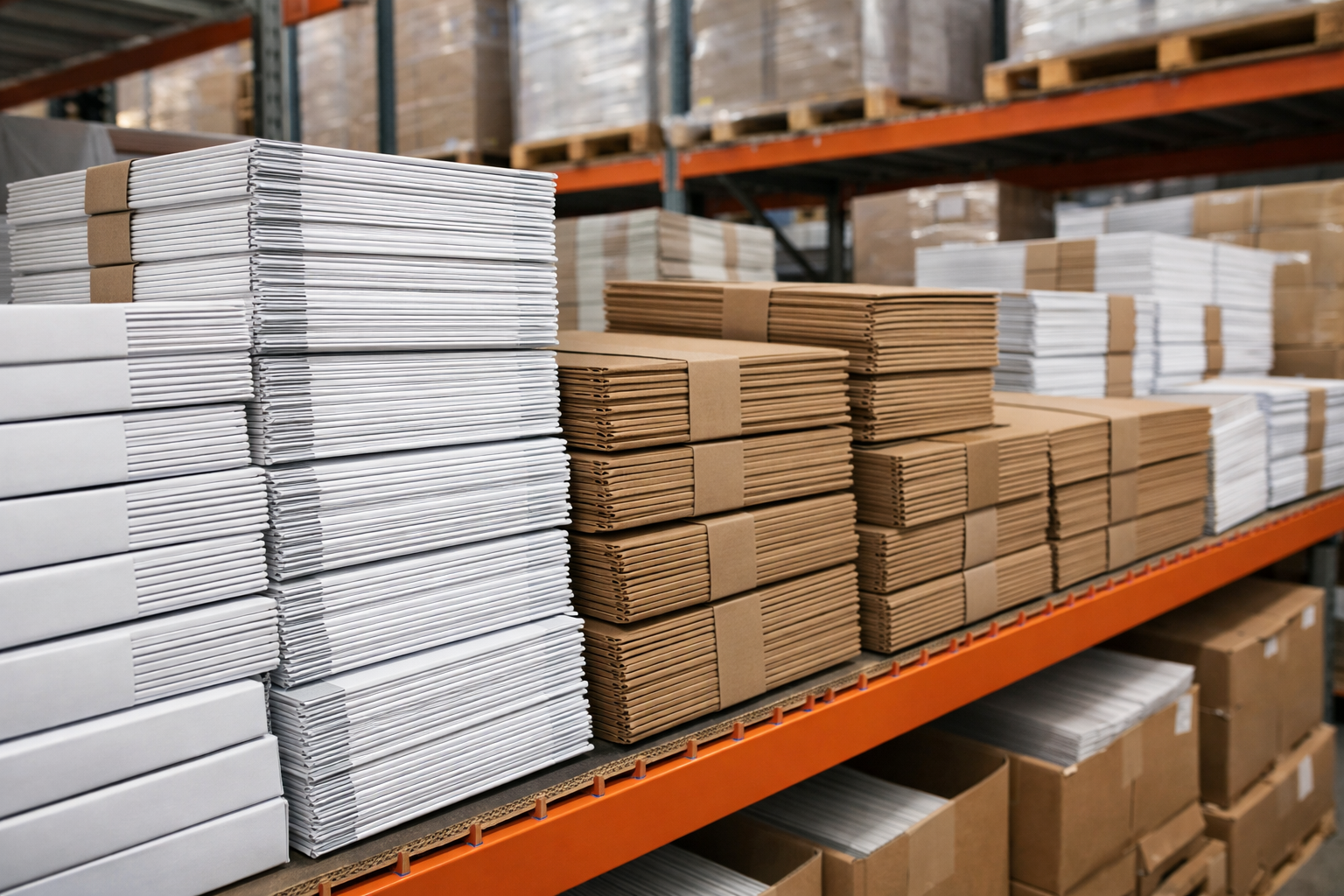
Bluntly, this is about floor math. A rack that holds 500 folded Packaging mailers may hold only 80 assembled cartons, and that difference shows up in replenishment labor by the second shift.
In practice, teams comparing Mailer boxes, shipping mailers, expandable kraft mailers, and mailers vs boxes are usually checking three things:
- Storage density: flat packs free up bays fast
- Pick speed: fewer box sizes means fewer mistakes
- Pack flow: less taping, less dunnage, less walking
For soft goods, books, and low-fragile SKUs, poly mailers for shipping and paper-based formats often beat cartons on labor. Not every time—glass and dense multi-item orders still need structure—but for growing sellers with tight aisles, the honest answer is simple: the search term “mailer” now signals an ops decision, not an email one.
Flat-pack mailer storage savings are changing packaging decisions
Last quarter, one fulfillment team cleared two rack bays just by swapping a carton-heavy SKU mix to flat packs. Their pick line didn’t get faster overnight, but storage pressure eased fast. That’s the point: a flat-pack mailer changes the math before labor even enters the picture.
For growing retailers, Packaging mailers are getting more attention because they store flat, stack tight, and trim dead cube. A case of shipping mailers can sit where assembled cartons would eat shelf after shelf, and that matters when inbound pallets are already crowding the floor.
How a flat-pack mailer cuts pallet footprint and shelf space compared with cartons
Mailer boxes and flat formats both save room compared with prebuilt cartons, but the biggest gains usually come from low-profile styles. In practice, 500 flat units can take a fraction of the cube of the same count in erected boxes — less air, less rack space, fewer awkward overflows. For soft goods, books, and thin kits, expandable kraft mailers or poly mailers for shipping often fit the slot better.
What operations managers should measure: cube usage, replenishment time, and touches per order
- Cube usage: cases per shelf or pallet position
- Replenishment time: minutes from reserve to pack station
- Touches per order: pick, assemble, tape, and pack steps
So what should a manager track first? Start with storage cube, restock frequency, and whether the packer handles one item or three. That difference — small on paper — adds up over 1,000 orders.
And that’s where most mistakes happen.
Where a mailer fits best in bulk purchasing plans for growing order volume
Bulk buys work best when SKU demand is stable and package profiles don’t swing week to week. Teams comparing mailers vs boxes should map top sellers by dimensions, return rate, and damage history, [redacted] lock mailers in for repeatable shipments.
A flat-pack mailer works best when the shipping profile is right
Is a flat-pack mailer really the right call for every order? No—and that’s exactly the point. In practice, the best results come from matching the pack style to the item’s shape, bend risk, and damage history, not from treating all mailers the same.
Apparel, books, prints, and folded soft goods: the strongest mailer use cases
For warehouse teams tight on shelving, Packaging mailers make the most sense for low-cube SKUs that don’t need void fill. Think folded tees, denim, thin books, inserts, and art prints with a stiffener. Good shipping mailers cut setup time, trim dunnage use, and let a picker hold more stock in one bay.
- Best fit: apparel, folded soft goods, media
- Use with care: sharp corners, heavy multi-item orders
- Watch: bend complaints and return-to-stock labor
When a corrugated mailer beats a poly mailer for crush resistance and presentation
The honest answer is simple: if the item can crease, corner-ding, or get crushed in a tote, corrugated wins. Mailer boxes hold shape better than standard poly mailers for shipping, and they present cleaner at delivery (which matters for giftable or branded orders). This is where the real mailers vs boxes decision happens—protection first, speed second.
When a bubble-lined mailer earns its higher unit cost by reducing damage and rework
But here’s the thing: a bubble-lined pack can save money even with a higher unit price. For small cosmetics, accessories, or fragile add-ons, expandable kraft mailers and padded formats often beat plain Mailer boxes on labor and cube while lowering damage claims. If a SKU keeps triggering re-packs, that’s the signal.
Most guides gloss over this. Don’t.
Why a mailer can lower fulfillment cost even before parcel rates are counted
In practice, a 2-second gain at the bench can erase hundreds of labor hours across 50,000 orders a year—and that savings shows up before anyone checks carrier invoices. For warehouse teams stuck between slotting limits and rising labor pressure, shipping mailers often beat cartons on touch time, storage density, and pack consistency.
Faster assembly at the pack bench and less tape usage per order
A flat-pack mailer usually needs one fold and one seal; Mailer boxes need more handling, more bench space, and more tape. That matters during peak. A former fulfillment manager would call it bench math—save 4 to 6 seconds per order, cut one strip of tape, and the line keeps moving. Even teams juggling Gmail, Outlook, Yahoo, and Mailchimp order alerts in the inbox still feel the win on the floor, not on a dashboard.
Lower dunnage demand, fewer oversized packs, and cleaner pick-to-pack handoff
Right-sized mailers reduce air, which cuts void fill and rework. Packaging mailers also help pickers hand off apparel, books, and soft goods without the usual “find a smaller box” delay. For flexible SKUs, expandable kraft mailers handle slight size swings better than rigid cartons, while poly mailers for shipping keep soft goods packed tight and dry.
Returns handling: why a mailer with easy-open and reseal features helps reverse logistics
Returns are where mailers vs boxes gets practical. Easy-open tear strips and reseal closures cut customer damage on opening, reduce repacks, and make reverse logistics cleaner—especially for apparel. Short version. Less tape, less dunnage, fewer touches.
The right mailer buying plan depends on space pressure, order mix, and replenishment risk
Bad buying plans eat warehouse space.
The answer is simpler than most buyers make it: match the mailer plan to cube limits, weekly order mix, and how fast fresh inventory can land.
How to choose mailer sizes without creating dead stock
Start with 30 days of shipped orders—not catalog dimensions. In practice, three size bands usually cover 80% of demand for soft goods and flat items. That matters because mailers, Packaging mailers, and shipping mailers only save space if the mix is tight.
- Pull top 20 SKUs by order count
- Group by packed dimensions, not product specs
- Cut any size used in fewer than 5% of orders
For books, kits, and rigid goods, test Mailer boxes against expandable kraft mailers. For apparel, poly mailers for shipping usually win on storage density—by a lot.
What to ask before placing a bulk mailer order for seasonal spikes
Ask three blunt questions: How many weeks of cover? What if demand is 25% off forecast? Can receiving handle the drop? A free inbox alert in email, outlook, or gmail is enough; no fancy checker, temp generator, yahoo login, google sheet, or microsoft dashboard needed.
A practical scorecard for testing one mailer style against another in live fulfillment
Run 200 live orders per style—and score:
Real results depend on getting this right.
- Pack time per order
- Storage slots used
- Damage or return rate
- Freight cost per shipment
The honest answer is that mailers vs boxes isn’t a branding debate. It’s an operations math problem.
Frequently Asked Questions
What does “mailer” mean?
A mailer is packaging made for shipping or mailing an item through the mail. In warehouse use, that usually means a poly mailer, bubble mailer, kraft mailer, or corrugated mailer chosen to protect the product while keeping pack time and postage under control.
What is a mailer used for?
A mailer is used to send products, documents, or flat goods without using a full shipping box. For online retail teams, it’s often the best fit for apparel, accessories, books, prints, and other items that don’t need a lot of void fill or crush protection.
Is a mailer an envelope?
Sometimes, yes—but not always. A mailer can look like an envelope, especially a poly or bubble format, yet some styles are rigid or self-locking and behave more like a slim carton than a standard mail envelope.
What was Norman Mailer known for?
Norman Mailer was a writer and public figure known for novels, journalism, and political commentary. That use of the word Mailer is a surname, not a packaging term, which is why search results for mailer can mix literary topics with shipping supplies.
And that’s where most mistakes happen.
What’s the difference between a poly mailer and a bubble mailer?
A poly mailer is light, flexible, and best for soft or non-fragile products like apparel. A bubble mailer adds built-in cushioning, so it’s the better pick for small items that need impact protection—phone accessories, cosmetics, or boxed jewelry, for example.
When should a warehouse use a mailer instead of a box?
Use a mailer when the product is durable enough to ship without rigid walls and when dimensional charges matter. In practice, this choice can save shelf space, cut packing steps, and lower parcel weight all at once (which ops teams feel fast).
Are mailers good for storage savings in a fulfillment area?
Yes. That’s one of their biggest strengths. A case of mailers stores flat and takes up far less racking or floor space than the same shipment volume in assembled cartons.
Can a mailer reduce shipping costs?
Often, yes—especially for soft goods and low-cube items.
A right-sized mailer can trim package weight, reduce dimensional charges, and shorten packing time, which matters more than people think once volume climbs past a few hundred orders per week.
What kind of products should not ship in a mailer?
Fragile, heavy, or crush-sensitive items usually shouldn’t go in a basic mailer. If the item can crack, bend, leak, or get damaged by rough handling, a box with the right cushioning is the safer call.
Real results depend on getting this right.
How do buyers choose the right mailer size?
Start with the packed item, not the product spec on the listing. Measure length, width, and final thickness after folding or bagging—[redacted] choose a mailer that fits close without forcing the seal, because oversized mailers waste space and undersized ones slow the line down.
For teams running out of room before they run out of orders, the packaging decision is no longer just about parcel cost. Storage density matters. Pack bench speed matters. Returns flow matters too. That’s why the flat-pack mailer keeps moving up the list for growing retail operations—especially where shelf space is tight, replenishment windows are short, and dead stock is expensive.
The better play isn’t choosing one format for every SKU. It’s matching the mailer to the shipping profile: corrugated for structure, bubble-lined for items that need cushion, lighter formats for soft goods that don’t. Get that match right, and the gain shows up fast in fewer touches, less tape, cleaner stations, and less wasted cube. Real savings. Before freight even enters the math.
The next step is practical: pull 30 days of order data, isolate the top 10 SKUs now shipping in oversized packs, and run a two-week floor test with one flat-pack mailer option against the current setup. Track cube used, pack time, damage, and return handling.
For more great reading, visit our site and explore related topics.


















Be First to Comment