
Across industrial zones and urban redevelopment projects, environmental challenges such as vapor intrusion, hydrocarbon contamination, and regulatory pressures continue to shape how cleanup technologies evolve. These conditions require not just reactive measures but carefully structured, science-driven approaches to risk mitigation and site recovery. One such solution provider is Remedia International, an environmental remediation company focused on subsurface contamination and emissions control. By integrating proprietary technologies and modular systems, the company addresses the diverse operational, environmental, and compliance requirements that define this highly specialized field. Environmental remediation companies play a vital role in safeguarding ecosystems while aligning with national and global regulations.
Environmental remediation refers to the engineered process of reducing, removing, or containing pollutants in soil, air, or groundwater to restore an area to safe and compliant conditions. Rather than relying on a single product or technique, remediation involves a coordinated system of interventions tailored to the site and its specific contaminants. Companies like Remedia International design and deploy custom remediation technologies that address odor emissions, volatile organic compounds (VOCs), and hydrocarbon impacts. These systems are process-based, emphasizing precision delivery, adaptive treatment strategies, and long-term performance within active or constrained environments.
Source Control
This involves identifying and managing the origin of pollutants—such as fuel releases or legacy industrial activity—before they spread. Remedia’s approach emphasizes early-stage control through engineered barriers or immediate treatment at the point of contamination.
Containment and Stabilization
To prevent migration of hazardous substances, remediation systems often isolate contaminants from groundwater, air pathways, or surrounding soil. Remedia technologies use physical and chemical mechanisms to stabilize volatile zones and reduce emission risks.
Treatment and Mitigation
Effective remediation reduces long-term environmental and human health risks through active treatment. Remedia International applies methods such as vapor suppression, biological degradation, or oxidation within controlled system boundaries, often in live operational sites.
Environmental remediation systems consist of three core components working in concert. First, delivery systems are engineered to precisely apply treatment formulations to subsurface or surface environments, often using modular and mobile units. Second, treatment agents—such as those deployed in Remedia’s vapor control or hydrocarbon stabilization applications—are selected to match site-specific conditions and regulatory goals. Finally, monitoring and support infrastructure ensures ongoing performance, allowing for adaptive control, compliance documentation, and minimal disruption to active facilities or surrounding ecosystems.
Remedia International is a specialized environmental remediation company focused on mitigating complex subsurface and emissions-related contamination. Operating internationally, the organization supports both public and private sector remediation efforts across industrial, infrastructure, and energy projects. Founded with a mission to provide modular, field-adapted systems, Remedia integrates engineering, environmental science, and compliance insight to address air, soil, and groundwater concerns. With operational projects across Europe, the Middle East, and the Americas, Remedia International supports a wide range of remediation initiatives through scalable, precision-delivery technologies designed for active and challenging environments.
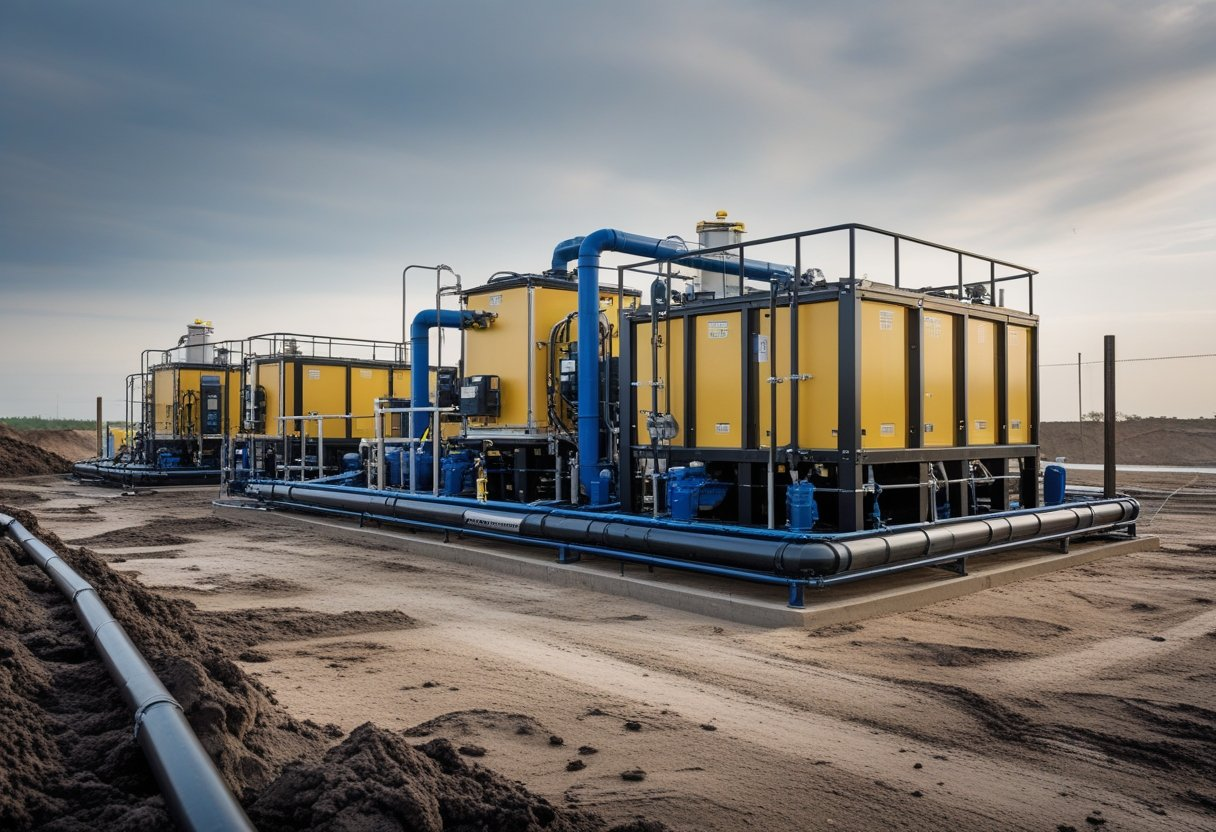
Remedia’s technology suite includes surface and subsurface treatment systems designed to address a range of environmental challenges. These systems are engineered to mitigate volatile organic compounds (VOCs), petroleum hydrocarbons, and industrial odor emissions. Their modular units deliver agents through low-pressure spray systems, injection tools, or vapor barrier configurations tailored to site-specific layouts. Applicable across construction sites, legacy industrial zones, tank farms, and ports, Remedia’s technologies can be used in both active operations and in long-term stabilization efforts. System integration includes real-time monitoring and adaptive dosing infrastructure, enabling field teams to respond dynamically to variable environmental conditions and regulatory thresholds.
Remedia’s vapor suppression systems are designed for rapid deployment in open or confined areas where emissions pose a risk to air quality and compliance. These systems use targeted delivery platforms to apply specialized formulations that interact with emission surfaces or vapor pathways. In another application area, subsurface treatment systems are configured to address hydrocarbon contamination through injection-based stabilization techniques. For odor control in high-impact zones such as ports and industrial redevelopment sites, Remedia provides aerosolized barrier systems that are non-invasive and suitable for continuous use. Each solution is designed with modular flexibility to fit evolving site conditions and access constraints.
Assessment and Planning
Each remediation effort begins with a thorough assessment of site conditions, contaminant types, and operational constraints. Remedia collaborates with environmental engineers and site operators to determine delivery methods and treatment strategies.
Deployment and Implementation
Following site-specific planning, modular systems are delivered and configured using either surface spray, subsurface injection, or barrier setups. Systems are adapted to project scale, ranging from confined construction zones to expansive tank farms.
Monitoring and Operational Considerations
Once operational, systems are monitored to ensure treatment agents are correctly delivered and retained in targeted zones. Remedia technologies support adjustment of dosing levels, system coverage, and maintenance cycles throughout active remediation phases.
Remedia technologies are applied across a range of industrial and environmental settings where contamination or emissions must be controlled. In manufacturing facilities or industrial redevelopment zones, systems are used for vapor suppression or odor management during excavation, demolition, or soil movement. At hydrocarbon-impacted sites, injection technologies stabilize pollutants in fuel storage areas, ports, or oil-affected infrastructure. For waste management and transfer stations, aerosolized barriers reduce nuisance odors and potential off-site impacts. In environmental restoration and compliance-driven projects, systems are configured for long-term use under regulatory oversight, often alongside active site operations. The modularity of Remedia’s platforms enables flexible deployment in both temporary and long-duration scenarios, whether for public infrastructure, energy projects, or urban brownfield conversions.
Remedia systems are designed with on-site environmental handling in mind, supporting safe transport, storage, and deployment of treatment agents. All deployments account for regulatory and compliance alignment, ensuring use within applicable environmental frameworks and permitting conditions. Operational environments may include active industrial zones or restricted-access sites, requiring adaptable configurations and mobile delivery platforms. Limitations may arise based on surface conditions, soil permeability, or proximity to sensitive ecosystems. Across all applications, Remedia International emphasizes the responsible use of materials and delivery systems to reduce environmental impact and support long-term stewardship goals within remediation planning.
Remedia’s remediation systems are engineered for seamless integration into active industrial, energy, or infrastructure sites. Deployment logistics prioritize minimal disruption, using mobile and modular units adaptable to surface or subsurface access points. The systems are compatible with diverse site layouts and can be scaled based on project size and environmental conditions. Storage and handling procedures are designed for field-readiness, with packaging and transport formats suitable for long-duration deployment. Routine maintenance involves inspection of dosing tools, monitoring units, and surface application equipment, ensuring safe and sustained operation throughout the remediation timeline.
Frequently Asked Questions (FAQs)
What is environmental remediation?
Environmental remediation is the process of removing, reducing, or isolating pollutants in soil, air, or water to restore environmental quality and comply with regulatory standards.
What types of sites require remediation?
Remediation is commonly used at industrial facilities, ports, brownfields, fuel storage locations, waste transfer areas, and redevelopment zones affected by contamination or emissions.
How are safety and handling addressed during deployment?
Systems are designed with field safety in mind. Remedia technologies use application protocols that reduce human contact, and delivery tools that minimize exposure during setup and operation.
What infrastructure is needed to use these systems?
Most systems can be deployed using existing access points, excavation zones, or staging areas. They require basic space for storage, power supply (if automated), and movement of mobile units.
How does this compare to traditional mitigation?
Unlike passive caps or long-term monitoring-only approaches, Remedia systems enable targeted treatment through controlled application. They complement, rather than replace, conventional engineering controls.
What about environmental impact during use?
Remedia systems are designed for environmental stewardship. By targeting contamination zones and using measured application techniques, they support minimal disturbance and responsible material use.
What product types does Remedia offer?
One example is vapor suppression systems, which apply treatment agents via low-pressure spray to manage odors and emissions during site activity.
Environmental remediation continues to evolve as a technically disciplined field intersecting environmental science, engineering, and regulatory compliance. As industrial activity and land use intensify across global regions, the need for adaptable, site-specific remediation strategies grows. Organizations involved in redevelopment, infrastructure, and environmental management are increasingly incorporating modular technologies to manage subsurface contamination, vapor intrusion, and emissions-related risks. With projects spanning active construction zones, hydrocarbon-impacted facilities, and long-term recovery areas, remediation systems must function within operational constraints while aligning with jurisdictional requirements. Companies like Remedia International support this process by delivering field-adapted solutions engineered to meet regulatory and environmental standards without disrupting primary site functions. Their involvement in both public and private sector projects reflects the broader integration of remediation practices into sustainable development planning, brownfield reuse, and environmental stewardship initiatives worldwide.