
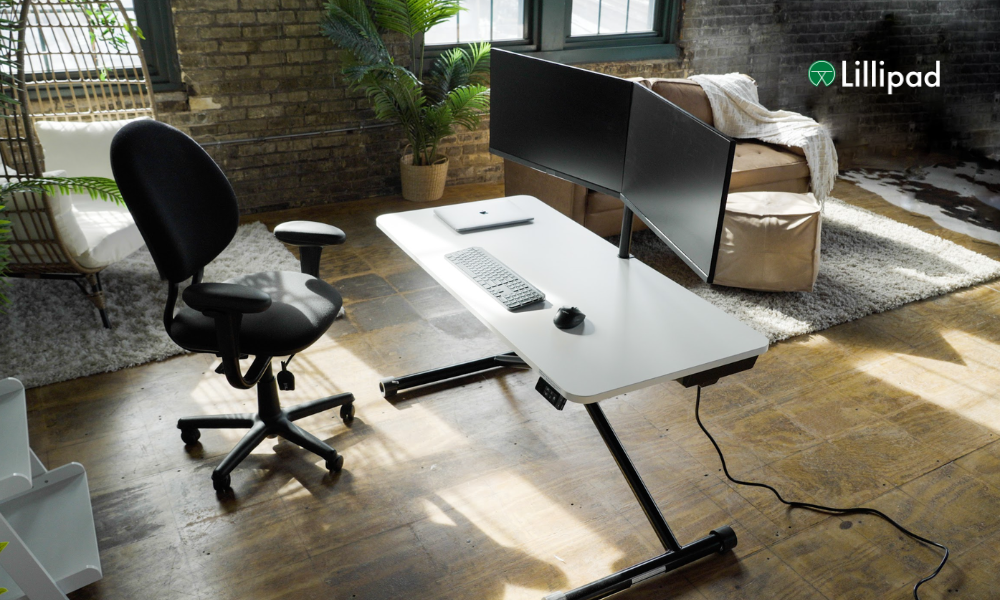

Leg numbness, ankle swelling, and cold feet often appear after long hours at a computer desk. Poor posture slows blood flow. Slow blood flow increases fatigue and reduces focus. Many users buy stand desks expecting fast results, but circulation gains depend on daily movement patterns, correct ergonomics, and consistent height adjustment.
Lillipad designs height-adjustable solutions that help users switch between sitting and standing without breaking workflow. A desk that moves quickly supports consistent posture change. Consistent posture change supports muscle activity. Muscle activity improves venous return and helps reduce lower limb pressure during long work sessions. Over time, this routine can support better comfort in both home office and corporate environments.
Stand Desks and Circulation Mechanics in the Workspace
Stand desks change joint angles and activate stabilizing muscles. Active muscles push blood upward. Upward blood movement reduces pooling in the calves and ankles.
In a traditional workspace, sitting compresses the thighs against the chair. Compression slows circulation. A stand-up desk removes that pressure and allows the calf muscle pump to function. Small weight shifts and short steps further improve flow and reduce stiffness during extended tasks.
A spacious workstation with a clear footprint supports movement. More movement improves circulation. Better circulation reduces fatigue and supports longer focus periods. These outcomes apply to both individual workstations and shared office space setups.
Ergonomic Alignment and Upper Body Blood Flow
Ergonomic alignment affects circulation in the arms, wrists, and shoulders. A keyboard placed at the correct height keeps the wrists neutral. Neutral wrists reduce tension and support micro circulation.
Height-adjustable standing desks should align the monitor at eye level and the elbows at a right angle. Proper height adjustment reduces shoulder compression and supports upper limb blood flow during typing and mouse use.
An ergonomic standing desk with a standing desk with keyboard tray keeps arm position consistent in both modes. Consistency prevents nerve pressure and supports comfort during gaming, writing, and detailed design work that requires precision.
Adjustable Standing Desk Features That Encourage Movement
An adjustable standing desk must move smoothly to promote frequent switching. Electric standing systems with quiet motors reduce interruption and support routine. Adjustable electric controls with stored height settings allow users to sit or stand in seconds.
A wide height range allows a precisely adjustable height for different users. Height-adjustable electric frames with one-piece lifting columns improve build quality and stability. Stable frames support multiple monitors, desktop devices, and desk accessories without shaking.
Solid wood and hardwood tops reduce vibration and improve durability. Premium finishes and high-quality craftsmanship support long-term reliability and easy-to-clean surfaces that maintain aesthetics in executive suites and home setups.
Sit Stand Desk Usage Patterns and Circulation Outcomes
Circulation gains depend on timing. Sitting for hours, then standing for hours, does not help. Alternating every 30 to 60 minutes keeps muscles active and blood moving.
Switch between sitting and standing before discomfort begins. Early movement prevents pooling. Preventing pooling reduces swelling and pressure in the lower legs.
Users who easily switch between sitting report warmer feet, less calf tightness, and reduced end-of-day fatigue. These physical changes indicate real vascular improvement rather than perceived comfort.
A standup desk with memory presets helps maintain this routine and supports consistent ergonomics across different tasks.
Home Office Setup and Lower Limb Health
A home office often limits movement because of its compact layout. Limited layout reduces stepping and weight shifting. Reduced movement lowers the calf muscle pump effect and slows circulation.
An L-shaped standing configuration creates a more spacious environment for motion and better equipment placement. More room supports posture change and small steps. Small steps improve circulation without interrupting workflow or screen visibility.
Cable management keeps the workstation clear during elevation. A clean desktop and organized drawer placement prevent obstacles when changing height and protect equipment.
Height-adjustable frames that move vertically help maintain clearance in tight office spaces and maintain a stable configuration.
Electric Standing Desk Comparisons for Circulation Support
Buyers often compare electric desks when choosing the best standing desk. The main factor for circulation is transition speed, stability, and ease of use.
Electric desks with memory presets make it effortless to change height settings. Adjustable electric systems increase switching frequency. Increased frequency supports muscle activity and venous return.
A riser provides basic sit-stand function, but full adjustable standing desk frames offer better leg clearance, better ergonomics, and stronger circulation support for long term use and heavier equipment.
Desk Accessories That Promote Blood Flow
The right accessory setup improves comfort and encourages movement. A soft standing mat reduces heel pressure and improves micro circulation. A footrest supports sitting posture and reduces thigh compression.
Monitor arms keep screens aligned during height changes. Proper alignment reduces neck strain and supports upper body blood flow.
Desk accessories should allow users to sit or stand without rearranging equipment. A spacious layout, stable configuration, and adjustable desks with cable management reduce friction during transitions and support a smooth workflow.
Productivity, Energy, and Posture Connections
Improved circulation increases oxygen delivery. Increased oxygen delivery improves cognitive function. Improved cognition supports productivity and sustained attention.
Alternating between sitting and standing helps improve posture. Upright posture reduces spinal compression. Reduced compression lowers fatigue and supports longer workflow periods across different tasks.
Ergonomic office furniture strengthens this chain. A standing desk offers mobility and structure for long projects, multiple monitors, and gaming sessions that require stable alignment and consistent ergonomics.
Real Limits of Sit-Stand Circulation Claims
A sit-stand desk is not a substitute for walking, stretching, or regular exercise. Standing still too long increases foot pressure and discomfort. Movement remains essential for vascular benefit.
Circulation gains are real when users maintain frequent posture changes, correct height settings, and proper ergonomics. Gains are minimal when the desk stays in one position for extended periods.
Height-adjustable standing desks with strong build quality, adjustable height memory, and stable lifting systems help users maintain an active routine and reduce barriers to movement.
Long-Term Habit Formation and Daily Routine
Circulation improvement depends on habit formation. Habits create consistency. Consistency supports physiological adaptation. Users who follow a sit-stand schedule for several weeks often report less swelling and better daily energy.
A structured routine can include sitting for focused tasks, standing during calls, and brief movement breaks between sessions. This pattern supports the muscle pump effect and reduces static loading on the lower body.
A well-planned setup with adjustable height desk controls, stable desktop placement, and clear cable paths makes it easier to maintain this routine. When the environment supports behavior, adherence improves.
Circulation Benefits Depend on Daily Behavior
Circulation improvements from a sit-stand desk are real when users move often, maintain ergonomic alignment, and keep the workstation clear for motion. Regular switching supports venous return, reduces lower limb pressure, and helps maintain energy throughout the day.
Lillipad provides high-quality electric desks with stylish, clean white options, multiple sizes, and premium finishes available online. With free shipping, free returns, durable materials, and thoughtful configuration, users can assemble a height-adjustable workstation that supports posture, circulation, aesthetics, and daily productivity. A desk that moves easily helps the body move often, and frequent movement drives real vascular benefits and a more active routine.