
The printing industry produces billions of pounds of waste every year. But a quiet revolution — digital-first design — is changing that story, one template at a time.
Have you ever ordered 200 wedding invitations, only to realize the date was wrong? Or maybe you’ve seen stacks of leftover event programs tossed into a recycling bin at the end of a ceremony. If so, you’ve witnessed one of the print industry’s oldest problems: waste.
For decades, printing meant committing. You picked a design, chose a quantity, and hoped for the best. If something changed — a typo, a new headcount, a last-minute schedule shift — you were stuck reprinting the entire batch. That meant more paper, more ink, more energy, and more money heading straight to the landfill.
But today, digital-first design is flipping that model on its head. By creating, editing, and perfecting documents on screen before a single sheet of paper is touched, businesses and individuals alike are slashing waste across the entire print supply chain.
In this article, we’ll explore three real-world examples of how digital-first design is making the print industry leaner, greener, and smarter — from the newspapers you read to the funeral program you hold at a memorial service.
What Exactly Is “Digital-First Design”?
Before we dive into the examples, let’s make sure we’re on the same page.
Digital-first design means creating content primarily for digital viewing, editing, and approval — and only printing it when absolutely necessary. It’s a mindset shift. Instead of designing for print and then adapting to digital, you design in digital and then selectively print.
This approach unlocks several waste-reducing advantages:
- On-demand printing — Print only what you need, when you need it.
- Instant editing — Fix errors digitally instead of reprinting entire runs.
- Template reuse — Use a single design file over and over with small changes.
- Digital distribution — Share documents electronically and skip printing altogether when possible.
- Accurate previews — See exactly what the final product looks like before committing to paper.
Think of it like cooking. The old way was preparing a giant buffet and throwing away whatever nobody ate. The digital-first way is taking orders first and cooking exactly the right amount.
Now, let’s look at three industries where this approach is making a measurable difference.
Case Study #1: Newspapers and Periodicals — From Massive Press Runs to Precision Printing
The Old Problem
Newspapers have historically been one of the print industry’s biggest sources of waste. A major daily newspaper might print hundreds of thousands of copies every morning — and a significant percentage of those copies go unsold. According to industry estimates, unsold newspaper copies can account for 10–30% of a print run, depending on the publication and distribution method.
That’s not just wasted paper. It’s wasted ink, wasted energy to run the presses, wasted fuel to deliver copies that nobody reads, and wasted labor to collect and recycle them.
The Digital-First Shift
The rise of digital news didn’t just give readers a new way to consume stories — it gave publishers a new way to think about print.
Here’s what’s changed:
The contrast is striking. Where publishers once printed a fixed number of copies based on rough estimates, they now use real-time subscriber data to determine exact print volumes. Instead of delivering identical content to every reader, they produce regionalized or personalized editions printed on demand. Long lead times for layout and proofing have been replaced by cloud-based editing with instant digital previews. The old habit of overprinting “just in case” has given way to lean printing based on confirmed demand. And where leftover copies once piled up for recycling or disposal, data-driven forecasting now keeps surplus to a minimum.
Major publications like The New York Times and The Guardian have embraced a “digital-first” editorial workflow. Stories are written, edited, and published online first. The print edition is then curated from the best digital content and produced with much tighter inventory controls.
The Results
The numbers tell a compelling story. Over the past 15 years, total newsprint consumption in the United States has dropped by more than 70%. While part of that decline is due to readers migrating to digital platforms, a substantial portion comes from publishers simply printing smarter. They’ve cut overruns, reduced page counts, and adopted lighter paper stocks — all enabled by digital-first workflows that give them better data and more flexibility.
“We used to print first and ask questions later. Now we publish digitally, measure demand, and print accordingly. It’s better for our readers and better for the planet.” — A managing editor at a mid-size regional newspaper
Case Study #2: Printed Stationery — Wedding Invitations, Funeral Programs, and Beyond
The Old Problem
If you’ve ever planned a wedding, organized a memorial service, or coordinated a large event, you know the drill. You sit down with a printer, pick a design, choose your paper stock, and place an order for a specific quantity.
Then life happens.
The guest list changes. Somebody’s name is misspelled. The venue switches. A family member needs a larger-print version. In the world of traditional print stationery, every one of these changes means one thing: reprint.
This is especially painful for sensitive occasions. Consider a funeral program — the small booklet handed to guests at a memorial or celebration of life service. These programs typically include:
- The order of service
- A biography or obituary of the deceased
- Photos and personal reflections
- Hymns, readings, or poems
- Acknowledgments and thank-you notes
Families are often making decisions about a funeral program during one of the most stressful and emotional times of their lives. Last-minute changes are not just common — they’re almost guaranteed. A sibling wants to add a reading. A photo needs to be swapped. The time of the reception changes.
Under the old model, each revision could mean discarding dozens or even hundreds of already-printed programs and starting over. The waste was significant — and the added stress on grieving families was even worse.
The Digital-First Shift
Today, the funeral program template has changed everything.
Here’s how it works: instead of starting from scratch with a graphic designer or a print shop, families (or funeral directors) choose from a library of professionally designed digital templates. These templates are fully editable — you can change text, swap photos, adjust colors, and rearrange layouts right on your computer or tablet.
The same digital-first approach applies to other printed stationery as well:
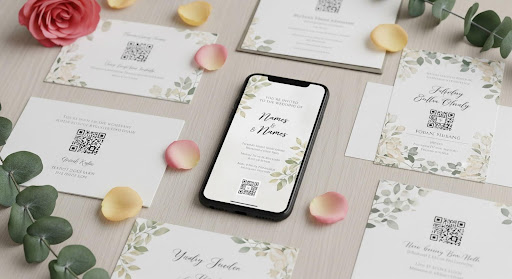
Wedding invitations traditionally suffered from overordering, address errors, design changes, and leftover extras — but editable templates, exact-count ordering, and digital RSVPs have largely solved those problems. Funeral programs, plagued by last-minute content changes, rush reprints, and the pressure of making decisions during grief, now benefit from funeral program templates with instant editing and on-demand printing. Event programs that once became outdated the moment a speaker changed or a schedule shifted can now be updated in real time and printed on demand. Business cards no longer need to be ordered in bulk only to become obsolete after a title change or rebrand — digital designs allow small-batch printing as needed. And holiday cards, where photo retakes, address list updates, and quantity misjudgments used to drive waste, now use personalized templates with variable data printing to get it right the first time.
The funeral program template is a particularly powerful example because it addresses waste at every stage of the process:
- Design Phase — No More Guesswork
A well-designed funeral program template gives families a professional starting point. Instead of going back and forth with a designer (each round generating printed proofs that may be discarded), they can preview and approve the design entirely on screen.
- Editing Phase — Instant, Unlimited Revisions
Need to change a Scripture verse at 10 PM the night before the service? With a digital template, that’s a two-minute fix. No phone calls to the printer. No rush fees. No wasted paper from the previous version.
- Printing Phase — Exact Quantities
Digital-first design pairs naturally with on-demand printing. Instead of ordering 150 funeral programs “just to be safe” and throwing away 40, families can print exactly the number they need. Some even print a smaller initial batch and add more during the service if needed.
- Distribution Phase — Digital Options
Many families now complement printed funeral programs with a digital version — a PDF emailed to out-of-town relatives, posted to a memorial website, or shared in a group chat. This means fewer physical copies are needed in the first place, and distant loved ones still feel included.
A Closer Look at the Funeral Program Template Workflow
Let’s walk through a typical modern workflow for creating a funeral program using a digital-first approach:
- Choose a template — Browse a library of designs organized by style (traditional, modern, religious, nature-themed, military, etc.). Select one that reflects the personality of the person being honored.
- Customize the content — Add the deceased’s name, dates, photo, obituary, order of service, and any special readings or musical selections. Most templates use drag-and-drop editors that require zero design experience.
- Preview digitally — View a realistic on-screen preview of the finished program. Check for typos, formatting issues, and photo quality. Share the preview with other family members for input.
- Make revisions — Update anything that needs changing. Add a pallbearer’s name. Switch a hymn. Adjust the font size for readability. Every edit is instant and free.
- Print on demand — Send the final design to a home printer, a local print shop, or an online printing service. Order only the quantity you need.
- Share digitally — Export a PDF version for email, social media, or a memorial website. Some platforms even offer interactive digital programs with embedded audio or video.
This workflow eliminates the vast majority of waste associated with traditional funeral program printing. No wasted proofs. No discarded overruns. No expensive rush reprints.
The Bigger Picture: Why Digital-First Design Matters for the Environment
Let’s zoom out and look at the cumulative impact.
The global printing industry consumes an estimated 400 million tons of paper per year. Paper production is responsible for roughly 5% of global industrial energy use and contributes to deforestation, water pollution, and greenhouse gas emissions.
Every unnecessary print job — every overrun, every outdated brochure, every reprinted funeral program — adds to that environmental toll.
Digital-first design attacks waste at its root. It doesn’t just make printing more efficient; it makes not printing the default. And when printing is necessary, it ensures that every sheet of paper serves a purpose.
Here’s a summary of the environmental benefits:
- Less paper consumed — On-demand printing and exact-quantity ordering mean dramatically less paper waste.
- Less ink and chemicals — Fewer print runs mean less ink, fewer solvents, and fewer chemical baths for printing plates.
- Less energy — Digital proofing replaces energy-intensive physical proofing and plate-making processes.
- Less transportation — Smaller, more targeted print runs mean fewer delivery trucks on the road.
- Less landfill waste — When you print only what you need, there’s almost nothing left to throw away.
- data printing, print-on-demand integration, and digital-first distribution strategies.
- The environmental benefits are substantial: less paper, less ink, less energy, less transportation, and less landfill waste across the entire printing supply chain.
- You don’t need to be a designer or a tech expert to benefit from digital-first design. User-friendly templates and online editors make these tools accessible to everyone.
- Digital-first doesn’t mean paper-free. It means paper-smart — printing with intention and precision instead of guesswork and excess.
Whether you’re a business owner looking to cut marketing print costs, an event planner tired of throwing away leftover programs, or a family member searching for the perfect funeral program template during a difficult time — digital-first design is here to make your life easier and the planet a little healthier.
Start small. The next time you need something printed, ask yourself: Can I design and preview this digitally first? Can I print only what I actually need? Is there a template that gives me a professional head start?
Chances are, the answer to all three questions is yes.
The tools are accessible. The templates are beautiful. The savings — in money, time, stress, and waste — are real.
The print industry isn’t dying. It’s evolving. And digital-first design is leading the way. Join the movement — start designing smarter today.