
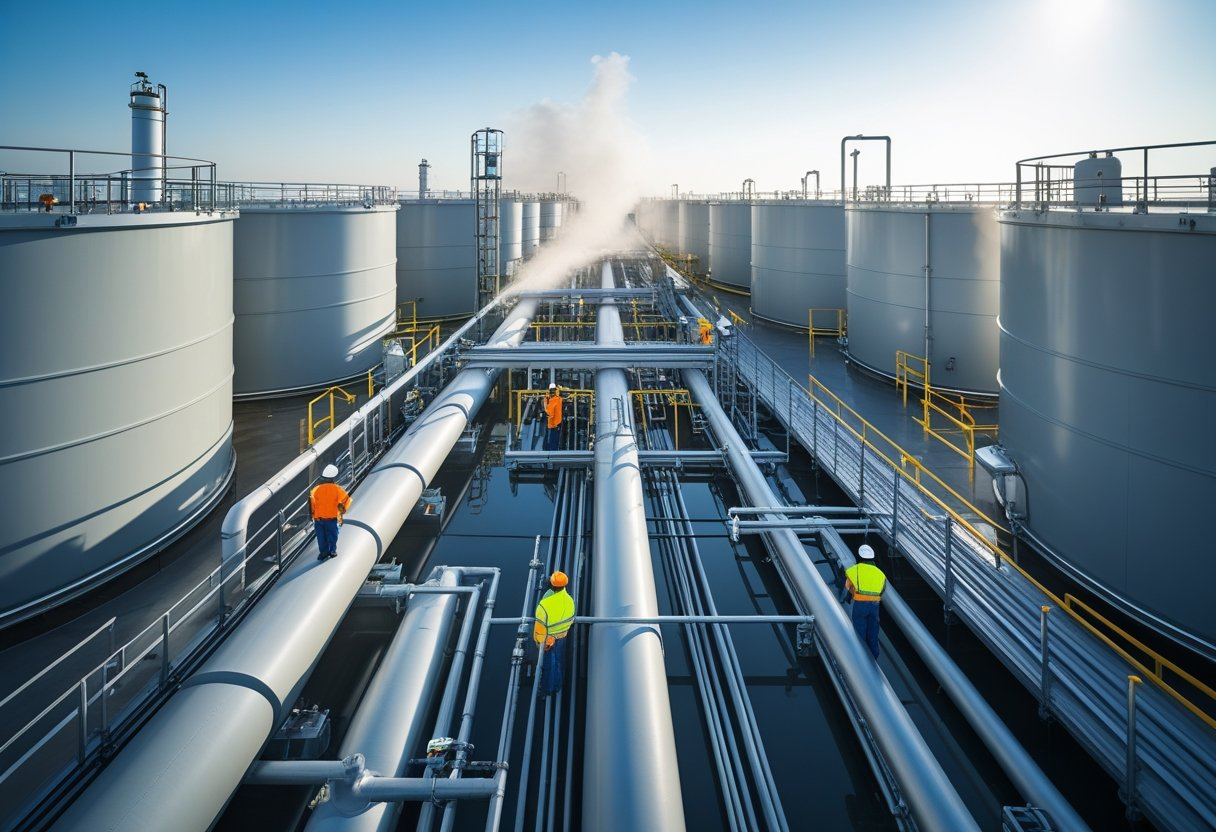

Industrial operations involving hydrocarbon storage zones and transfer infrastructure continue to face complex environmental challenges, including vapor emissions, persistent odors, surface contamination, and increasing regulatory scrutiny. Storage tanks, loading racks, and pipeline transfer points can create localized exposure risks if not properly managed, particularly in high-throughput environments. Effective odor control transfer stations and infrastructure-integrated mitigation strategies are therefore becoming essential components of environmental compliance planning. Remedia International is an environmental remediation technology company focused on structured, science-based approaches to contamination and vapor management. Its solutions, including the Remedia Hydrocarbon Stabilizer, are designed to integrate with industrial odor control system frameworks while supporting environmental risk management across storage and transfer facilities.
Environmental remediation refers to structured processes designed to manage and reduce environmental risks associated with contamination, vapor emissions, and impacted industrial environments. Rather than representing a single product or isolated action, remediation is a coordinated intervention that integrates assessment, stabilization, and treatment strategies. In industrial settings, remediation technologies are used to address hydrocarbons, surface contamination, and emission-related challenges in a controlled and measurable way. Remedia International positions remediation as a science-based environmental management approach, focused on mitigating vapor release, managing contaminated surfaces, and supporting regulatory compliance. These technologies are typically implemented as part of broader operational infrastructure, reinforcing environmental safeguards within storage, transfer, and processing environments.
Source Control
Environmental remediation begins with identifying and addressing the origin of contamination or emissions. In industrial environments, this may involve stabilizing hydrocarbons at storage or transfer points to reduce vapor release potential and environmental exposure.
Containment and Stabilization
Remediation systems are designed to limit the migration of contaminants through air, soil, or surface pathways. Stabilization technologies support the reduction of volatility and help manage environmental movement within operational zones.
Treatment and Mitigation
Through controlled application methods and engineered formulations, remediation technologies work to mitigate environmental impact. Remedia International’s approach emphasizes process integration—embedding environmental controls into operational workflows rather than treating remediation as an isolated response activity.
Environmental remediation systems typically consist of coordinated functional components.
Application and Delivery Systems ensure that treatment agents are introduced into targeted areas such as storage tanks, transfer lines, or impacted surfaces in a controlled manner.
Treatment Formulations are engineered to interact with hydrocarbons and vapor sources, supporting stabilization and emission management objectives. Remedia International’s Remedia Hydrocarbon Stabilizer is presented as part of this treatment framework.
Monitoring and Operational Support Infrastructure provides oversight of implementation conditions, enabling remediation activities to align with operational and environmental management requirements.
Together, these components form an integrated system-based approach to contamination management within industrial environments.
Remedia International is an environmental remediation technology company focused on managing hydrocarbon-related environmental challenges in industrial environments. The company develops stabilization-based remediation solutions designed for use in storage terminals, transfer facilities, refineries, and related infrastructure. Its operational focus centers on mitigating vapor emissions and managing contamination risks associated with fuel and hydrocarbon handling systems.
With an international operational footprint, Remedia International works across regions where hydrocarbon storage zones and transfer infrastructure require structured environmental oversight. The company’s solutions are positioned for integration within industrial odor control system frameworks, supporting operational compliance strategies in environments where emissions management and environmental controls are part of routine facility operations. Remedia’s approach reflects a systems-based model, embedding remediation technologies within existing industrial processes rather than positioning them as standalone interventions.
Remedia International offers hydrocarbon stabilization technologies designed for application in industrial storage and transfer environments. Its solutions are intended to address vapor emissions, odor concerns, and environmental impacts associated with fuel and hydrocarbon handling operations. The company’s technology portfolio focuses on treatment formulations that interact with stored hydrocarbons to support vapor management and contamination control.
Deployment typically occurs within storage tanks, transfer systems, and associated operational infrastructure. Systems are introduced through controlled application methods that align with facility workflows, allowing integration into existing environmental management practices. The technologies are positioned for use in refineries, tank farms, fuel terminals, and related industrial contexts where vapor and odor management form part of environmental oversight requirements. Remedia’s solutions are structured to function within established compliance and environmental monitoring frameworks.
One core remediation approach presented by Remedia International involves hydrocarbon stabilization within fuel storage and handling systems. This approach is designed for operational environments where stored fuels may generate vapor emissions or odor concerns during transfer and containment activities. The technology is applied directly within hydrocarbon systems to support emission management at the source.
Applications include bulk storage tanks, pipeline transfer points, and fuel handling facilities where environmental controls are integrated into infrastructure planning. The design intent centers on embedding remediation processes into routine operational workflows, enabling stabilization measures to function as part of facility management practices. This category of remediation technology reflects a preventative, infrastructure-aligned model focused on managing environmental exposure within industrial hydrocarbon environments.
Assessment and Planning
The remediation process begins with identifying environmental management needs within hydrocarbon handling or storage environments. This includes evaluating vapor emission points, operational transfer systems, and storage conditions where stabilization technologies may be integrated. Planning focuses on aligning remediation measures with facility workflows and environmental oversight requirements.
Deployment and Implementation
Remedia International’s technologies are introduced through controlled application methods within storage tanks, transfer lines, and related infrastructure. Implementation is structured to integrate with existing operational systems, ensuring compatibility with ongoing industrial processes.
Monitoring and Operational Considerations
Remediation activities are incorporated into broader environmental management frameworks. Operational oversight includes maintaining appropriate application conditions and aligning implementation practices with facility-level environmental and compliance protocols.
Remedia International’s remediation technologies are positioned for use across a range of industrial and hydrocarbon-handling environments. These include refineries, fuel storage terminals, bulk tank farms, and manufacturing facilities where hydrocarbon materials are stored, blended, or transferred as part of routine operations.
In hydrocarbon-impacted sites, such as areas affected by fuel handling activities or vapor emissions from storage systems, stabilization-based remediation approaches are integrated into infrastructure to support contamination management planning. Transfer racks, pipeline interfaces, and loading zones represent operational contexts where remediation systems may be incorporated as part of environmental control strategies.
Waste handling and transfer environments involving hydrocarbon residues or fuel byproducts may also utilize stabilization technologies within containment systems. Additionally, remediation approaches can be applied within compliance-driven environmental management programs, where industrial facilities implement structured environmental safeguards aligned with regulatory oversight. Across these contexts, the focus remains on integrating remediation technologies into operational infrastructure rather than treating environmental management as a standalone intervention.
Implementation of remediation technologies requires alignment with environmental handling protocols and facility-level compliance frameworks. Application conditions must reflect storage configurations, transfer system design, and operational throughput levels. Environmental management planning may include coordination with regulatory requirements governing vapor emissions, contamination control, and handling procedures within hydrocarbon storage zones.
Remedia International positions its technologies within structured environmental management systems, emphasizing integration rather than isolated treatment measures. Considerations may include compatibility with odor control transfer stations, operational safety procedures, and environmental documentation practices. Sustainability positioning is framed around responsible environmental stewardship and controlled management of hydrocarbon-related emissions within industrial settings, without reliance on performance guarantees or outcome-based claims.
Deployment of Remedia International technologies is structured to align with existing industrial infrastructure, including storage tanks, fuel handling systems, and transfer facilities. Integration planning considers compatibility with tank configurations, throughput conditions, and established environmental management procedures.
Storage and handling of treatment formulations follow standard industrial material management practices consistent with site-level operational protocols. Implementation is designed to fit within routine maintenance cycles and facility workflows, reducing the need for standalone remediation systems. Ongoing coordination with environmental oversight procedures ensures that stabilization measures remain aligned with regulatory and operational documentation requirements.
Frequently Asked Questions (FAQs)
What is environmental remediation?
Environmental remediation refers to structured processes used to manage contamination, vapor emissions, and environmental risks in industrial or impacted environments. It involves assessment, stabilization, and treatment measures integrated into operational systems rather than relying on a single corrective action.
Where is environmental remediation typically applied?
Remediation technologies are commonly used in refineries, fuel storage terminals, tank farms, pipeline transfer areas, manufacturing facilities, and other industrial sites where hydrocarbons are stored, handled, or processed.
How are remediation technologies deployed in industrial settings?
Deployment typically occurs within existing infrastructure such as storage tanks or transfer systems. Treatment formulations are introduced through controlled application methods designed to align with facility workflows and environmental management procedures.
What safety and handling considerations apply?
Implementation follows standard industrial material handling and safety protocols. Storage, application, and integration are coordinated with site-level operational procedures and environmental compliance frameworks.
How does this approach differ from traditional mitigation methods?
Traditional mitigation methods often rely on external containment or ventilation systems. Stabilization-based remediation approaches, including the Remedia Hydrocarbon Stabilizer, are integrated directly into hydrocarbon systems to manage vapor-related concerns within operational infrastructure.
Are remediation systems intended to replace existing environmental controls?
Remediation technologies are positioned to function within broader environmental management frameworks. They are typically integrated alongside established monitoring, compliance, and operational safeguards.
How is environmental impact considered in remediation planning?
Remediation planning emphasizes structured environmental management, alignment with regulatory oversight, and integration into responsible operational practices. The focus remains on controlled handling of hydrocarbons within industrial environments rather than outcome-based claims.
As industrial infrastructure continues to evolve under environmental oversight requirements, remediation technologies remain part of structured risk management strategies across storage and transfer operations. Remedia International develops stabilization-based environmental solutions designed for integration within existing hydrocarbon handling systems, supporting operational alignment with regulatory frameworks and environmental management planning. Its technology applications are positioned for use in facilities where vapor management, contamination control, and infrastructure compatibility form part of routine environmental oversight. By embedding remediation processes within industrial workflows, the company’s approach reflects a systems-oriented model focused on responsible environmental handling practices in complex operational environments.