

Families considering boarding schools often start with academic offerings or campus resources. What tends to matter just as much, though, is how students live day to day. Co-educational boarding schools shape not only how students learn, but how they interact, manage responsibility, and carry themselves in shared spaces.
Delphian School describes itself on its official YouTube channel as “an independent, K–12, coeducational boarding and day school nestled in the scenic hills of Oregon.” Boarding schools like Delphian differ from day schools because learning doesn’t stop when classes end. Students eat together, study together, and follow the same daily rhythms. In co-ed settings, those rhythms involve regular interaction across genders under consistent expectations. The result is a community that feels less segmented and more reflective of life beyond school.
For many families, this structure feels practical rather than idealistic. Students aren’t separated into narrowly defined peer groups. They learn to communicate and cooperate with a wide range of personalities throughout the day, which influences how they handle conflict, collaboration, and accountability.
Over time, gender becomes less of a dividing line and more of a background detail. Expectations are shared. Standards are uniform. Students are measured by their conduct and effort, which can support a steadier sense of independence.
Classroom Dynamics in a Co-Ed Setting
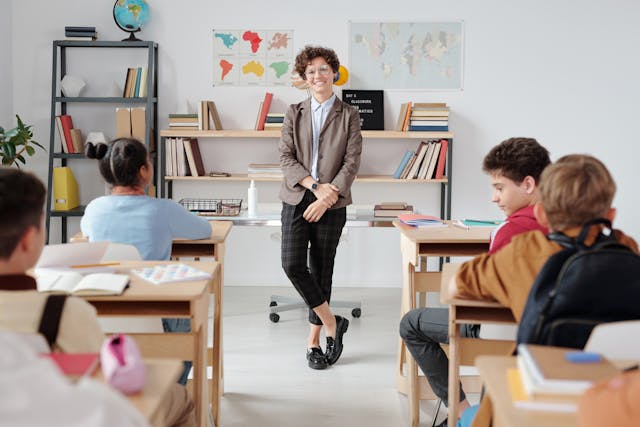
Classroom discussions in co-educational environments tend to unfold with more variation. Students approach questions differently, speak with different levels of confidence, and respond to disagreement in distinct ways. That mix affects how conversations move forward and how ideas are tested, often requiring students to articulate their thinking more clearly.
Group assignments add another layer. When students work across genders, planning and decision-making often require clearer communication. Assumptions are challenged more quickly, which pushes students to explain their reasoning rather than rely on familiarity or shared habits.
Academic interaction is shaped not only by coursework but by comfort level among peers. In one survey summarized in the Breakthrough Schools co-education research review, 72 percent of students in co-educational learning environments reported that they found it easier to make friends with peers of the opposite sex, a factor that can influence participation, collaboration, and willingness to engage in class discussion.
Learning in this environment also reduces adjustment later on. Students become accustomed to participating in spaces where collaboration, critique, and evaluation aren’t separated by gender. That familiarity supports academic confidence rather than distraction.
Daily Life and Social Learning Outside the Classroom
Residential life at schools like Delphian is where most social learning takes place. Shared schedules, common areas, and dorm responsibilities create repeated interaction that can’t be avoided or filtered. In co-educational boarding schools, this constant proximity shapes behavior in practical ways.
Living alongside peers of different genders requires attention to boundaries. These expectations are reinforced through rules, routines, and staff presence. Students learn quickly that their actions affect others, especially in close quarters where privacy and cooperation must coexist.
Participation in daily activities often reflects this environment. Research examining mixed-gender school settings published through the U.S. National Library of Medicine found that students in co-educational environments demonstrated more gender-neutral behavior and engaged in a wider range of activities than students in single-sex settings, a pattern that aligns with broader participation during residential programs, shared downtime, and campus activities.
As familiarity increases, assumptions tend to fall away. Students learn who is reliable, who listens, and who contributes. Social roles are shaped more by behavior than labels.
Confidence, Maturity, and Emotional Development
Boarding school requires students to handle stress, disagreement, and responsibility without immediate family support. In co-educational settings, they do this within a socially mixed group, which adds complexity but also encourages broader emotional awareness.
Students adjust how they communicate based on who they’re speaking with. They learn when to be direct, when to pause, and when to listen. These adjustments happen through daily interaction rather than formal instruction, shaping emotional control through practice.
Research summarized by Roger Bacon School’s review of co-educational learning notes that students in co-educational schools have reported higher levels of self-esteem and lower levels of anxiety and depression than peers in single-sex environments, suggesting that regular interaction in mixed settings can support emotional stability and confidence.
Residential staff play an ongoing role in this development. Guidance tends to be steady rather than reactive, helping students reflect on choices, resolve issues, and build habits that support maturity.
Leadership, Activities, and Shared Responsibility
Leadership in co-educational boarding schools rarely follows a single model. Student roles in clubs, residential life, and governance bring together individuals with different approaches to organization and decision-making.
On larger boarding campuses such as Delphian School’s 720-acre property in Oregon, students typically engage in a wide range of activities that require coordination, shared space, and responsibility across the school community.
Team-based activities require cooperation across genders in visible ways. Students learn how to contribute without dominating and how to accept direction without disengaging. These lessons are reinforced through daily practice rather than formal instruction.
Responsibility is also shared in practical terms. Dorm expectations, event coordination, and peer accountability require follow-through and consistency. Students see quickly that leadership depends as much on reliability as on authority. Over time, leadership becomes less about position and more about contribution. That shift can influence how students approach group work long after they leave school.
Preparing Students for Life Beyond School
Most academic and professional environments are co-educational. Boarding schools that reflect this reality give students early experience managing shared responsibility and collaboration in mixed settings.
Schools such as Delphian School operate on a structure designed to support students across multiple stages of development, from early grades through graduation. Students learn how to handle disagreement without escalation and how to work alongside people with different priorities. These habits develop through routine interaction rather than isolated lessons.
Independence takes on a broader meaning in this context. Students aren’t just managing their own schedules. They’re learning how individual choices affect a community with shared rules and expectations.
When students leave boarding school, the social transition is often less abrupt. The environments they encounter afterward feel familiar rather than unfamiliar or segmented.
Addressing Common Questions and Concerns
Some families worry that co-educational environments may distract from academics. In well-structured boarding schools, daily schedules, supervision, and clear expectations keep attention focused.
Rules around conduct and shared spaces are typically explicit. Consistent enforcement reduces uncertainty and helps students understand boundaries early on. What’s more, staff presence is integrated into residential life. Advisors and faculty observe patterns and intervene before issues escalate, which supports stability.
Communication between schools and families reinforces these systems. Clear expectations and regular updates help align priorities and address concerns early.
Closing Reflection
Co-educational boarding schools offer a setting where academic effort, social interaction, and personal responsibility intersect throughout the day. Students learn how to meet expectations while living among peers who differ from them.
The strength of this model lies in its realism. Students aren’t insulated from difference, nor are they left to manage it alone. Structure and guidance shape maturity through daily practice.
For families seeking an environment that balances discipline with social exposure, co-educational boarding schools like Delphian remain a steady and practical choice.